

Ex-Palantir Engineers Left To Solve The Patent Problem That 'Frustrated' Them For Years
Plus: the bonus scheme that drove Shoosmiths to a million AI prompts four months early.

Sunday, 21st December 2025. Newsletter #14
Good morning,
‘Tis the season for Legal AI funding rounds, apparently. While most of us are wrapping presents, investors have been unwrapping their checkbooks - €20M+ flowed into specialist AI tools this week. And in the spirit of giving, Shoosmiths gifted their staff an early Christmas bonus by smashing their million-prompt target four months ahead of schedule.
This will be the final edition of Best Practice for 2025. The newsletter will return on Sunday, 11th January 2026 - recharged and ready for what promises to be another transformative year in Legal AI.
Let’s dig in.
SPONSORED CONTENT
This edition is brought to you by Aline.
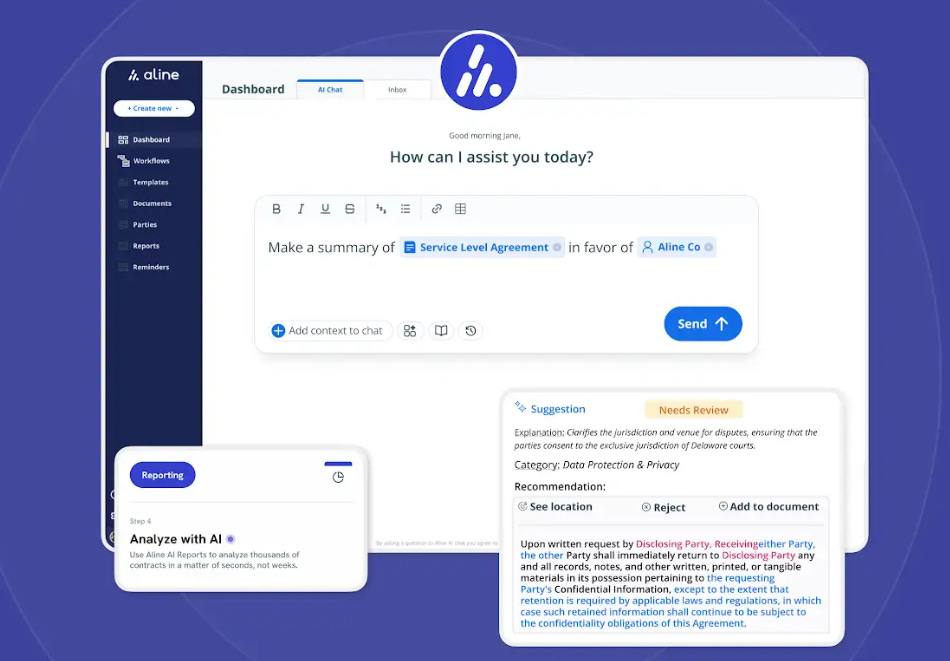
Aline syncs with local and shared drives, such as Google Drive, to analyze contracts with AI and extract any data point in plain English. Query agreements like data, with no manual tagging.
Book a demo to try Aline for free. Explore our AI contract repository and reporting, plus 25% off your first year with code George.
AWESOME COMPLIANCE
1. Compliance Finally Gets Its Own AI Platform
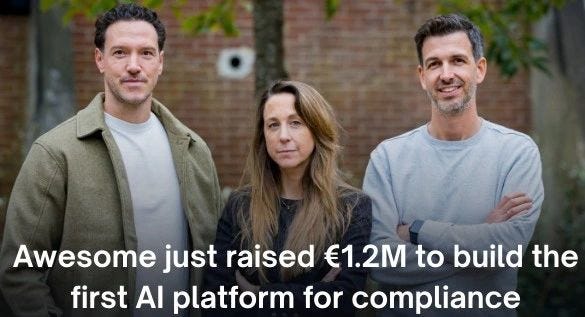
Awesome Compliance, a Dutch legal tech startup, announced a €1.2M seed round this week to build what they’re calling “the first collaborative AI platform targeting compliance practitioners.”
The platform automates AI Act risk assessments, generates contracts and policies, and provides collaborative workspaces for practitioners and clients. Rather than building general-purpose legal AI, Awesome is going deep on regulatory compliance - particularly focusing on GDPR, the EU AI Act, the Data Act, and upcoming regulations.
What makes their approach interesting is the “productization” angle - allowing firms to package parts of their compliance expertise into repeatable offerings rather than starting from scratch with each client.
George’s take: The Legal AI market is fracturing into vertical specialists who understand the nuanced workflows of specific practice areas. Awesome’s timing is also perfect, with EU regulations creating massive compliance workloads that manual processes simply can’t handle at scale.
ANKAR
2. Ex-Palantir Engineers Raise $20M for AI-First Patent Platform
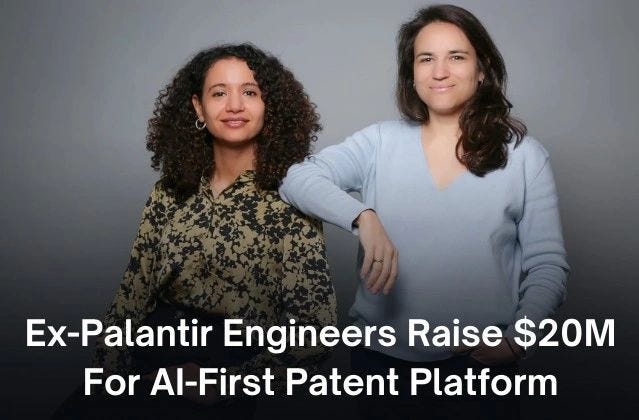
Ankar, founded by former Palantir engineers Tamar Gomez (CEO) and Wiem Gharbi (CTO), closed a $20M funding round this week to tackle what they describe as “a hodgepodge of manual processes” in patent protection. The company claims its LLMs can scan 150 million patent applications and 250 million scientific publications in minutes.
Whilst at Palantir, the founders saw innovative work trapped in years-long patent protection processes involving manual database searches and drafting friction, leaving valuable IP exposed. With the fresh funding, Ankar plans to double headcount and expand into US R&D hubs in automotive and electronics.
The announcement comes just weeks after both Solve Intelligence and Perplexity Patents entered the IP space, signaling accelerating investor interest in specialized legal domains rather than horizontal generalist tools.
George’s take: If Ankar can make patent protection genuinely cheaper - not just faster - they could unlock a market of smaller innovators currently priced out of IP protection entirely. Right now, patent filing costs thousands, which means startups with tight budgets often launch without protection and hope for the best.
The patent AI race is heating up precisely because the incumbents (traditional IP law firms) haven’t moved fast enough to serve the long tail of innovation - and that’s a massive market opportunity for whoever gets the economics right first.
SHOOSMITHS
3. Shoosmiths Hits Million-Prompt Target Four Months Early
UK firm Shoosmiths announced this week that it reached its goal of one million Microsoft Copilot prompts more than four months ahead of schedule, unlocking an additional £1 million for its firmwide bonus pool. The target, announced back in April 2025, formed part of Shoosmiths’ multi-million “collegiate” bonus scheme open to all staff except partners and business services directors.
The firm, which scored an A* for tech in Legal Cheek’s recent Trainee and Junior Lawyer Survey, reports that Copilot is delivering tangible benefits across non-legal tasks - tidying up emails, summarizing documents, generating ideas, supporting research, and managing meetings. CEO David Jackson emphasised: “This is not just about how many times someone uses AI - it’s about how well we use it and the benefits it will have for our clients.”
Shoosmiths became the first major UK law firm to link a firmwide bonus directly to AI usage, a move that attracted significant attention when announced but clear skepticism from some quarters about whether quantity-based targets would drive quality outcomes.
George’s take: The skeptics were wrong. Hitting the target four months early proves that financial incentives actually work to overcome the adoption inertia that’s plagued Legal AI rollouts at other firms. I think what helped is that they also built the supporting infrastructure (knowledge hubs, drop-in sessions, innovation leads) that made AI useful enough that people wanted to use it.
But the real competitive advantage isn’t the money - it’s creating an environment where lawyers feel safe experimenting with AI without billable hour pressure or partner skepticism.
In other AI news: McDonald's AI Christmas Ad Disaster Becomes Case Study in What Not to Do

McDonald’s Netherlands released a 45-second AI-generated Christmas ad titled “the most terrible time of the year” that featured a series of mishaps befalling people at Christmas - presents knocked off cars, carol singers’ sheet music blown away, and even Santa’s sled stuck in traffic.
Online audiences denounced the use of AI in making the commercial, with backlash so intense that McDonald’s shut down comments over the weekend before delisting the video entirely just three days after publishing.
But the aftermath got even more interesting. Creative agency All Trades Co. released an AI-generated video that critiques McDonald’s ad by using one of the characters from the original spot. “Commercials used to use real actors, and those real actors used to be under contract buyouts,” the AI character says while dipping her hand into a Burger King bag. “It almost seems like we should value human labor, craft, and creativity.”
The video makes a sharp point - when a corporation uses AI to create an advertisement, it effectively relinquishes control over how those characters may appear in future media, largely because such works are difficult to register with copyright authorities.
You might like: Publishers Are Flocking to Substack in 2025
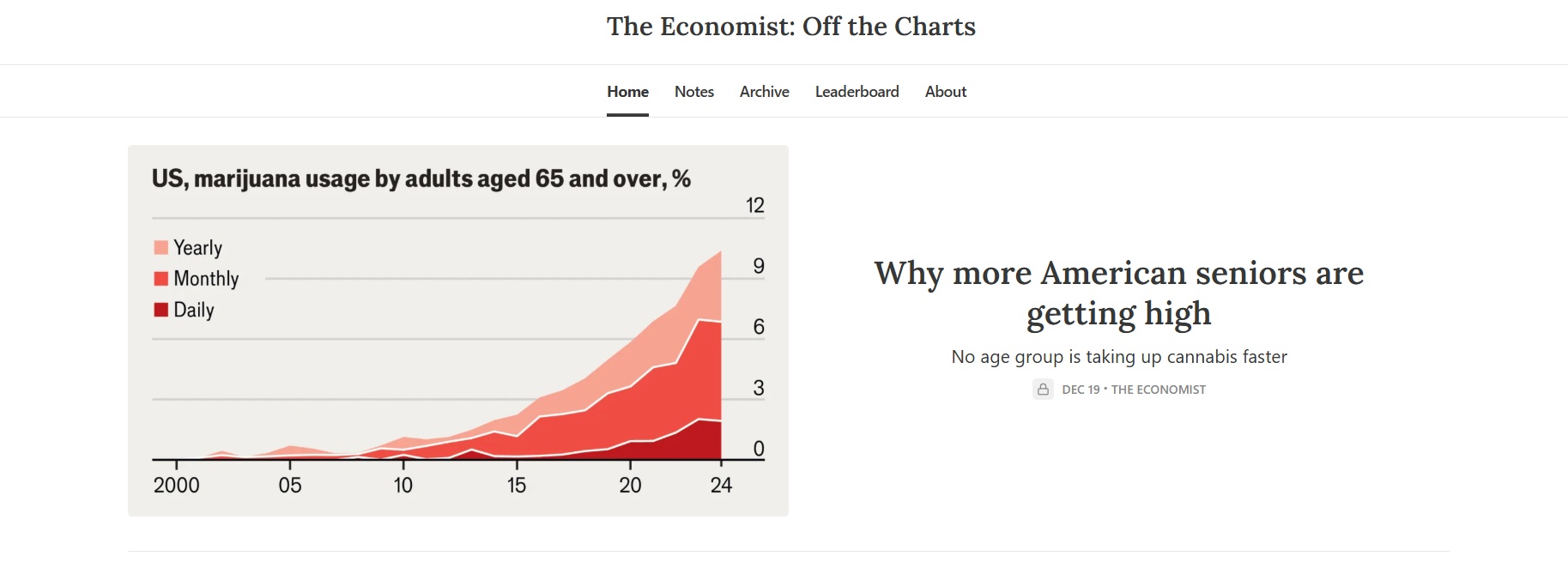
Major publishers including The New York Times, Chicago Tribune, Daily Mail, The Economist, The Financial Times, The New Yorker, New York Magazine and Reach have all launched Substack newsletters this year.
While the platform was once seen as a refuge for independent writers, publishers are now using Substack to reach new audiences and build communities, as traffic from search and social keeps slipping.
The Economist launched its data journalism newsletter “Off The Charts” on Substack in September, with President Luke Bradley-Jones telling Digiday that the launch is an experiment to test niche offerings that can build new audiences without cannibalizing the main bundle.
Sarah Ebner, Financial Times’ director of editorial growth and engagement, said research shows that Alphaville “strongly resonates” with younger readers, and launching on Substack is an effort to “reach more of them by launching on a platform where we know they already are.”
Dan Oshinsky, who advises publishers on email strategy, has been “inundated lately with clients asking if they should launch a Substack.” For publishers, it represents a low-risk way to test new voices, formats and audiences without overhauling their core businesses - most have made their Substack newsletters free to access, even paywalled publishers.
Why this matters for Best Practice: This is pretty annoying for independent creators like me who are trying to build their own publication away from the noise of all the bigger outlets. Substack was supposed to be the place where individual writers could build direct relationships with readers.
The irony is that these legacy publishers are coming to Substack precisely because independent writers proved the model works. We showed that readers will pay for direct, authentic voices.
That’s everything for this week.
If you enjoyed reading this week’s roundup, consider sharing it with a friend.
I’m always looking for how to improve Best Practice. If you have any feedback, good or bad, hit reply to this email and let me know.
Have a great Christmas and see you in 2026!
George