

Harvey Signs Harvey Specter
Plus: Thomson Reuters' 2026 AI Report lands, and AI gets its first insurance policy.

Sunday, 22rd February 2026
Hey, happy Sunday.
A busy one in Legal AI. Harvey did something nobody saw coming, and yet, in hindsight, it was completely obvious. Thomson Reuters dropped their annual AI report with some data worth sitting with. And ElevenLabs made a move that could matter a lot for how enterprise AI gets deployed in legal settings.
Let’s dig in.
PARTNER CONTENT
This edition is brought to you by Aline.
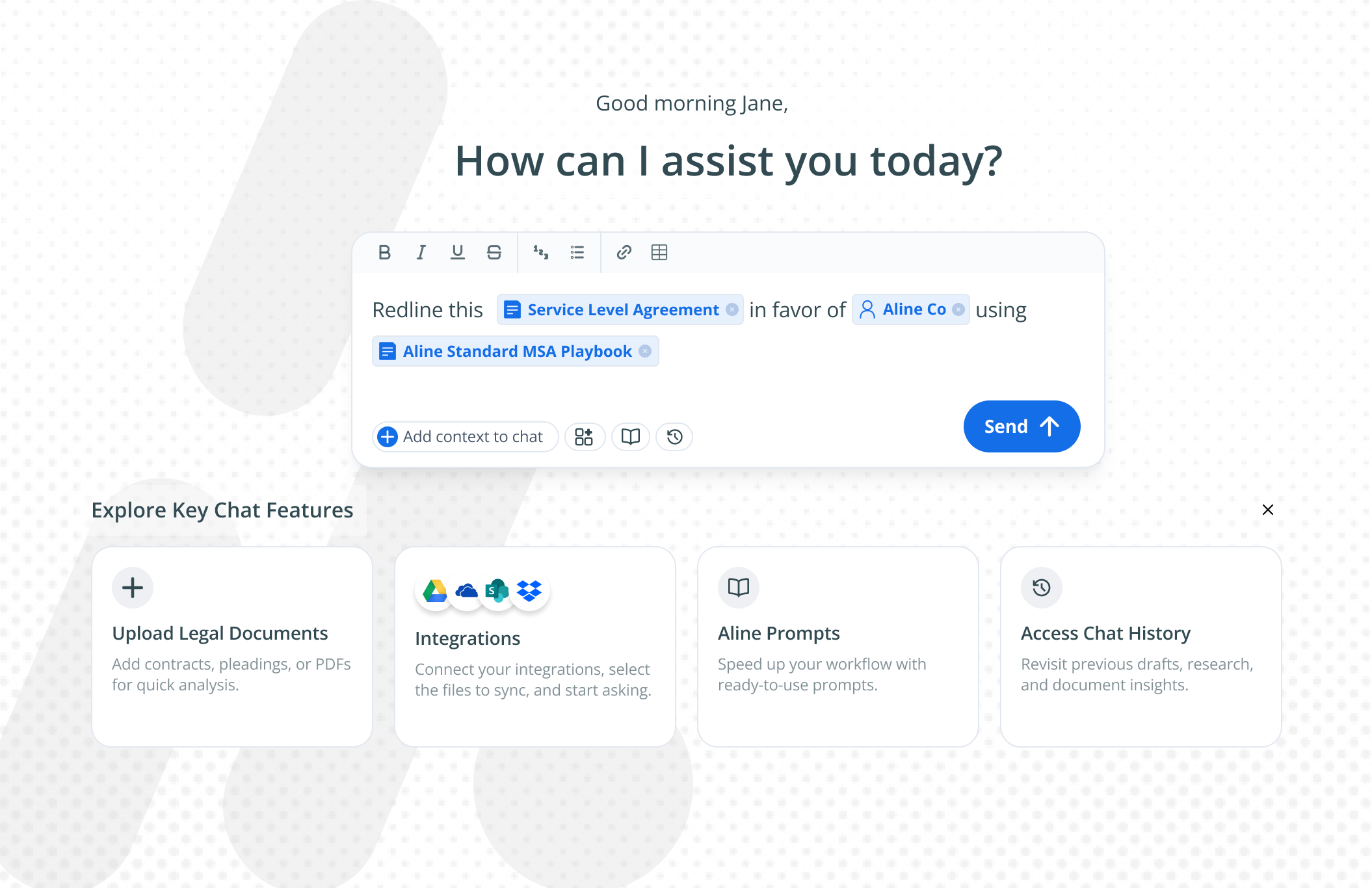
Aline redlines like a human lawyer. Aline Legal AI suggests fallback clauses, flags risky language, and applies your playbooks automatically. Routine edits happen instantly, so legal can focus on strategy.
Book a demo to try Aline for free. Explore our AI redlining plus 25% off your first year with code George.
Want to partner with Best Practice? Reply to this email.
HARVEY
1. Harvey Signs Harvey Specter
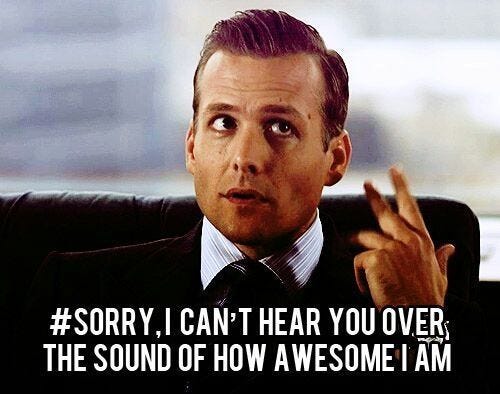
Harvey has signed its first-ever brand ambassador, Gabriel Macht. The actor who played Harvey Specter in Suits, the character the company is literally named after. The partnership was announced alongside the launch of Harvey’s new Instagram account, “@askharvey”.
CEO Winston Weinberg said the goal is to build a brand that resonates with lawyers and future lawyers globally. Macht, for his part, said he was drawn in because he wants to “support a responsible approach that keeps public interest in view” (and probably got a nice paycheque from it).
The move follows Legora’s deal earlier this month with Swedish golfer Ludvig Åberg, whose tournament kit now features their logo - and it’s a deliberate step away from the press releases and firmwide rollout announcements that have defined Legal AI marketing until now. Harvey’s current valuation is reportedly around $11 billion.
George’s take: Harvey has spent three years laser-focused on product and enterprise contracts. Signing a Hollywood spokesperson now tells you they think the battle for the next wave of customers isn’t necessarily won through new press announcements, but instead is won in brand recognition.
Law students graduating are going to know Harvey the company the same way they know Harvey the character. That’s a long game, but it’s a smart one. Legora went after golfers. Harvey went after the fictional lawyer who arguably sent more people to law school than any careers day ever did. I wouldn’t rule out more of these. The legal AI brand wars are just getting started.
Download for your commute this week: My podcast with Ross McNairn, Co-founder of Wordsmith AI
THOMSON REUTERS
2. The numbers are in, and agentic AI is following GenAI’s footsteps
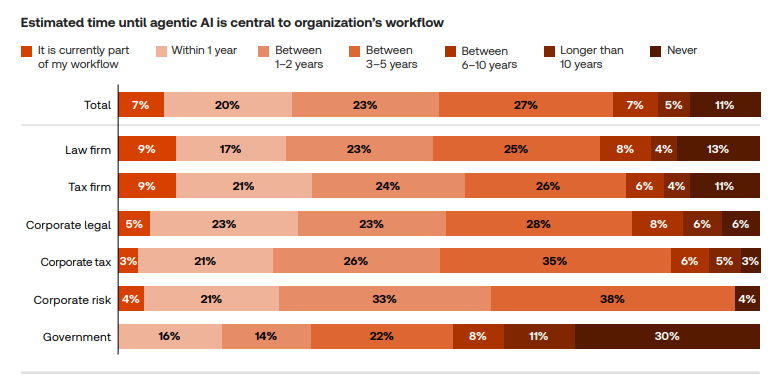
Thomson Reuters released their 2026 AI in Professional Services Report this month, drawing on responses from 1,500+ professionals across legal, tax, and risk in 27 countries. The headline is that GenAI adoption in professional services nearly doubled in a year, with 40% of organisations now using it versus 22% in 2025. Over 80% of current users deploy it at least weekly.
It shows Corporate legal departments are more bullish on AI than the law firms serving them, with 72% of in-house respondents believe GenAI should be applied to their work, compared to 62% at law firms.
On agentic AI, only 16% of firms currently use it, but 35% plan to and another 30% are considering it. That’s 65% of the market either already moving or preparing to - which is almost exactly where GenAI sat two years ago. Just 18% of organisations collect any ROI metrics on AI at all, and where they do, the focus is on internal cost savings rather than client outcomes. Firms are also getting contradictory signals from clients: 41% report being told simultaneously to use AI and not to use it.
George’s take: The report shows most Legal AI customers are probably still in the first year of contracts, which means renewal season is coming, and firms that haven’t built any framework for measuring impact are going to struggle to justify the spend. The winner in that conversation will be the one with the clearest evidence of value delivered.
ELEVENLABS
3. AI Just Got Insured (and what it means for Legal)
ElevenLabs, the AI audio company, became the first to go live with an AIUC-1-backed insurance policy, specifically designed to cover the actions of AI voice agents. The product lets enterprises underwrite the actions of AI agents deployed through ElevenAgents - including scenarios like an AI agent providing incorrect information to a customer.
The AIUC-1 certification required more than 5,000 adversarial simulations across data privacy, safety, security, reliability, and accountability, modelled on real-world AI failures including hallucinations and prompt injection attacks.
A lot of enterprise AI pilots never reach full deployment because procurement teams can’t get comfortable with accountability and risk. Insurance, the same way human employees are covered, is one way to bridge that gap.
Co-founder Mati Staniszewski put it plainly, enterprises need “the security framework and AI insurance coverage” to deploy at scale with confidence.
George’s take: The certification and insurance model ElevenLabs is piloting is likely to become a standard procurement requirement across AI vendors, and legal is one of the highest-stakes deployment environments out there. Imagine the same framework applied to a Harvey or Legora integration, a law firm could point to an independently certified, insured AI system when a client asks how they’re managing AI risk.
But the SRA's (UK regulatory body) guidance is already pretty clear that solicitors are responsible for any work that goes out under their name, AI-generated or not. And systems like Harvey and Legora warn that all output should be verified. So maybe we don’t need it, but this will be an interesting space to watch.
In other AI news: Tesla brings Grok to the UK, including a “sexy” mode
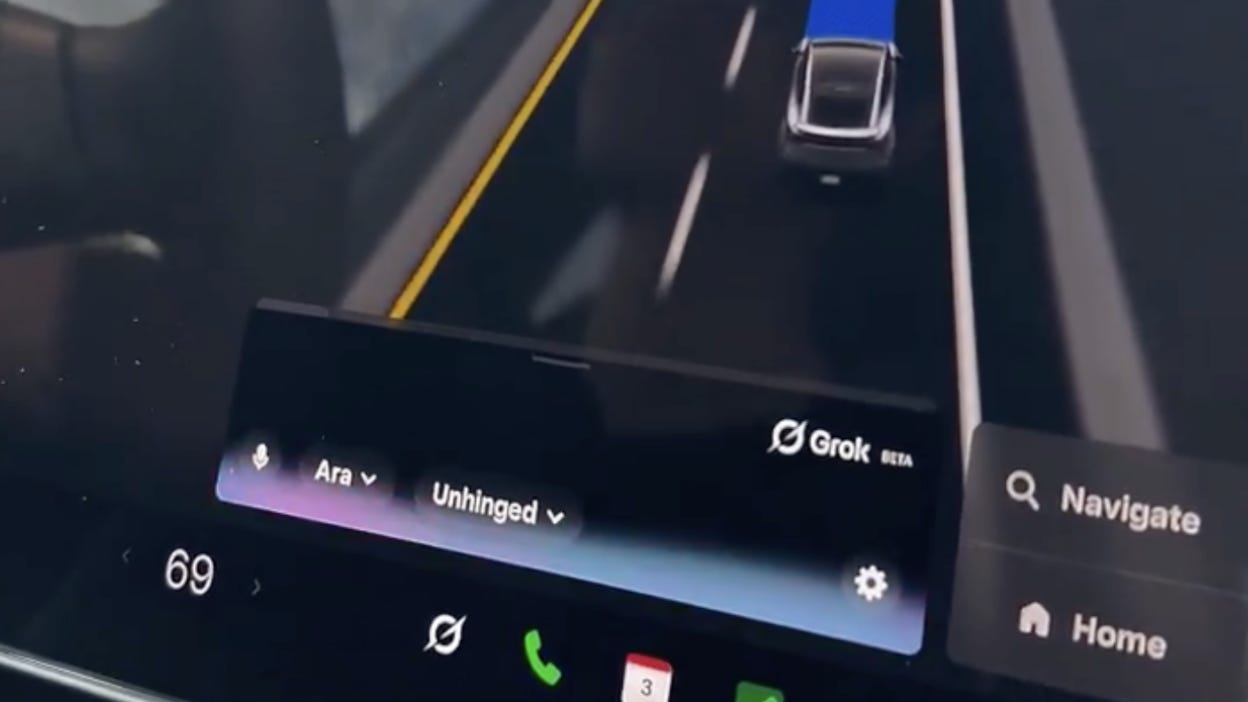
Tesla this week rolled out Grok, Elon Musk’s xAI chatbot, to their Model 3 and Model Y cars in the UK via an over-the-air update. It can set navigation destinations, explain dashboard alerts, and answer questions in what Tesla describes as a “smooth, human-like conversational flow.” It also comes with eight personality modes, which is where things get interesting.
Standard options include Therapist, Storyteller, and Meditation. Then there’s Conspiracy - which behaves like an unhinged conspiracy theorist - and, for over-18s, modes called Romantic, Sexy, Unhinged, and Argumentative. Tesla has confirmed that NSFW conversations are not recorded and cannot be traced back to the vehicle.
I recommend you watch some TikTok videos on Grok in Tesla’s, they’re quite funny, but also seriously impressive the way you can just get in the car, tell it to take you to McDonalds, and the car will start driving you there on autopilot. Tesla are leap years ahead of other car manufacturers in this space.
One thing I learned this week
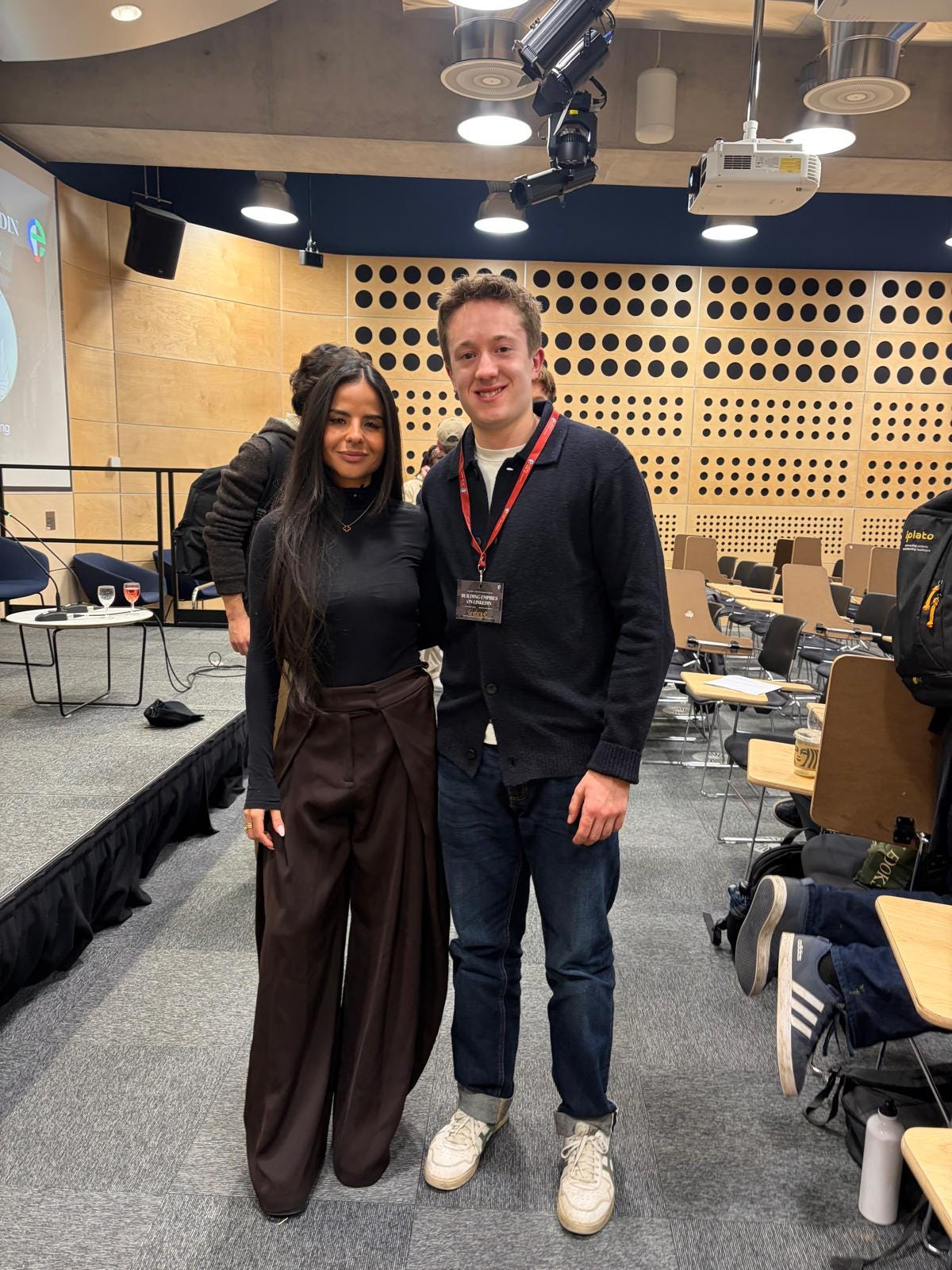
I was at LSE at an creators even this week where I got to hear from Lara Acosta, an online creator with 300,000+ LinkedIn followers, one of the most followed creators in the professional space.
One thing she said stuck with me: if she were building a startup today, one of her first hires would be someone in content, or a videographer. She literally had her own videographer following her around recording everything, which then gets cut into reels, posts, clips for future posts.
Distribution is the product.
That’s everything for this week. If you found this useful, consider sharing it with a colleague.
I’m always looking to improve Best Practice. Please reply to this email if there’s anything you think I should cover, change, or cut.
See you next Sunday,
George