

Legora Eyes $6 Billion Valuation Four Months After Its Last Round
Plus: Thomson Reuters Acquires Noetica, And Disney Fires At ByteDance

Sunday, 15th February 2026
Hey, happy Sunday.
You might notice some new branding for Best Practice, including a new logo, fonts, and brand colours. I’ve been playing around with Figma all weekend and knowing me I’ll probably change it again in a few months!
This week: Thomson Reuters snaps up another AI startup to fortify CoCounsel, Legora’s rumoured new fundraising round, and Disney fires a legal warning shot at ByteDance over its new video generator.
Let’s dig in.
Dropping this week:
I have a new (in-person) podcast dropping this week with a very exciting guest.
Stay tuned 👀
Clue: He is a lawyer-turned-founder based building for in-house legal teams.

THOMSON REUTERS
1. Thomson Reuters Acquires Noetica to Bring Deal Intelligence Into CoCounsel

Thomson Reuters announced the acquisition of Noetica, a New York-based AI startup founded in 2022 by former Wachtell Lipton associate Dan Wertman alongside AI scientist Tom Effland and former Deloitte consultant Yoni Sebag.
Noetica transforms unstructured transaction data into structured market intelligence, helping deal professionals benchmark what’s “market” during M&A and debt negotiations. The platform reportedly covers over $1 trillion in transaction volume in 2025 alone and encompasses over 100 million data points across M&A, debt, and capital markets, with half of the top 25 US law firms already using it.
Thomson Reuters Ventures had already backed Noetica’s $22 million Series A in 2024, making this a bit of a classic “try before you buy”. The plan is to integrate Noetica’s analytics directly into CoCounsel, allowing lawyers to benchmark key deal terms throughout negotiations and access in-depth data analysis across deal workflows.
George’s take: This is Thomson Reuters doubling down on a data-first strategy, and it’s not the first time they’ve gone shopping. They acquired Safe Sign Technologies back in August 2024 to bolster CoCounsel’s underlying legal LLMs. Now they’re layering structured deal intelligence on top. Thomson Reuters is betting that proprietary data, not model performance, is the moat. And they’re probably right. Foundation models are increasingly commoditised. What can’t be replicated overnight is a structured database of what’s actually “market” across thousands of real transactions.
Listen to my conversation with Alexander, the co-founder of Safe Sign Technologies, below.
LEGORA
2. Legora in Talks to Triple Valuation to $6 Billion

According to Bloomberg, Legora is in talks to raise a new funding round that would triple its valuation to $6 billion, just four months after its $1.8 billion Series C. The round hasn’t been finalised and the amount being raised is unclear, though Bloomberg reports it will be led by an existing investor.
If it closes, this would cap off an astonishing trajectory for the Stockholm-headquartered company. Legora was valued at $675 million in May 2025, hit $1.8 billion by October, and now reportedly sits at $6 billion - a nearly 9x increase in under a year.
The platform now serves more than 600 law firms and in-house legal teams across 50+ markets, up from 250 firms in just 20 markets back in May.
Meanwhile, Harvey is reportedly in talks to raise $200 million at an $11 billion valuation led by Sequoia and Singapore’s GIC.
George’s take: Harvey at $11 billion on $190 million ARR represents roughly a 58x revenue multiple. That's already exceptional for any SaaS company. If Legora were to hit a $6 billion valuation on approximately $23 million ARR - then that’s north of 260x revenue - or around 150x even if you give them credit for hitting their $40 million ARR target this year. For context, best in class SaaS companies typically trade at 10-15x revenue.
I'd guess a majority of both companies' customers are still on first-year contracts, so we simply don't know how many will renew. The talk of the town right now is ARR, but ARR only tells you what people are paying today. Harvey and Legora will need to keep their customers genuinely embedded in their workflows and deliver strong NRR (net revenue retention) to sustain these valuations. If renewal rates disappoint, multiples of 58x - let alone 260x - start to look very fragile indeed.
DISNEY v BYTEDANCE
3. Disney Hits ByteDance With Legal Action Over Seedance 2.0
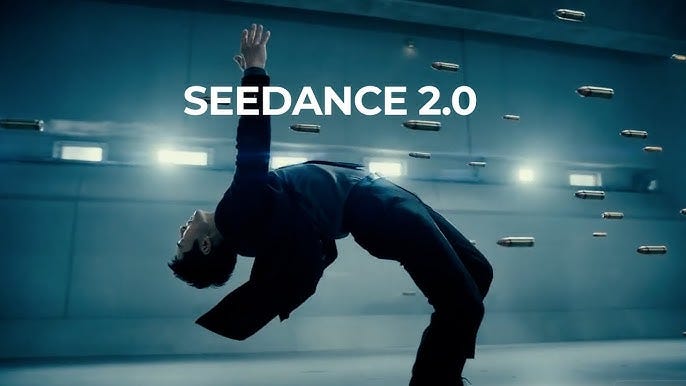
Disney sent a cease-and-desist letter to ByteDance on Friday after its newly released AI video generator Seedance 2.0 produced videos featuring copyrighted Disney characters including Spider-Man, Darth Vader, and Grogu. Disney accused ByteDance of pre-packaging Seedance with what it called a “pirated library” of Disney characters, treating the studio’s intellectual property as though it were “free public domain clip art.”
The backlash has been swift and broad. The Motion Picture Association said Seedance 2.0 had engaged in “unauthorized use of US copyrighted works on a massive scale” within a single day of launch. SAG-AFTRA condemned the tool for using members’ voices and likenesses without consent. The controversy erupted after a highly realistic AI-generated fight scene between Tom Cruise and Brad Pitt went viral, along with riffs on Stranger Things, Lord of the Rings, and other major franchises.
George’s take: I took a look at Seedance 2.0 video generation, and it’s seriously realistic compared to OpenAI’s Sora and Google’s Veo 3. This is a bit like a Deepseek moment, but for video generation.
This is also a preview of the legal battles that will define AI’s boundaries for years to come. AI companies that pay to license win partnerships. Those that don’t get cease-and-desist letters. For in-house counsel and IP lawyers, the Seedance saga is about to become a must study case.
In other AI news: Czech Ice Dancers Skate to AI Music at the Olympics

Czech siblings Kateřina Mrázková and Daniel Mrázek made their Olympic debut in Milan this week, but it was their music choice that grabbed headlines. Part of their rhythm dance routine used AI-generated music styled after Bon Jovi, paired with AC/DC’s “Thunderstruck.” The duo had previously faced backlash earlier in the season for using AI-generated tracks that appeared to lift lyrics directly from the New Radicals’ 1998 hit. While no official rules prohibit AI music in competitive skating, the incident sparked debate about creativity and originality in sport. As one TechCrunch writer put it, “Isn’t this sport supposed to be creative?”
One Thing I Learned This Week: “Eat the Frog!”

There’s a productivity method called “Eat the Frog,” based on a quote often attributed to Mark Twain: “If it’s your job to eat a frog, it’s best to do it first thing in the morning. And if it’s your job to eat two frogs, it’s best to eat the biggest one first.”
The idea is simple. Identify the one task you’re most likely to procrastinate on - the thing that feels heavy, awkward, or mentally draining - and do it before anything else. No emails, no Slack, no easing into the day. Frog first.
I’ve been trying it for the past couple of weeks and it’s made a noticeable difference. For instance, this morning I wouldn’t check my phone or do anything else before I get my newsletter out of the way; then I can crack on with the rest of the day. The rest of the day just feels lighter when the heaviest thing on your to-do list is already behind you. I recommend you try.
That’s everything for this week.
If you enjoyed reading this week’s roundup, consider sharing it with a friend.
I’m always looking for the latest on Legal AI. Send me a message if you’ve seen something I can cover, or just want to say hi!
See you next week,
George
The valuations are crazy - what is the justification for these?