

This Ex-Clifford Chance Lawyer Built An AI That Writes Your Chambers Submissions
Plus, Why OpenAI's ChatGPT Health launch matters for legal AI; Harvey adds memory but forgets who you are

Sunday, 11th January 2026. Newsletter #15
Welcome back, and happy New Year.
After three weeks away, I’m returning with sharper analysis and bigger ambitions. This year, I’m aiming for 20,000 subscribers (you can read the full roadmap on LinkedIn), but more importantly, I want to make sure this newsletter is genuinely useful to you.
So I need your help: what’s working? What would you change? What topics or trends do you want me to dig into? Reply to this email and let me know.
You’ll notice a shift this year toward more evergreen analysis - pieces that look beyond the news cycle to examine longer term patterns shaping legal AI. The first of these is nearly ready, and I think you’ll find it worth the wait.
Let’s make 2026 count.
SPONSORED CONTENT
This edition is brought to you by Aline.
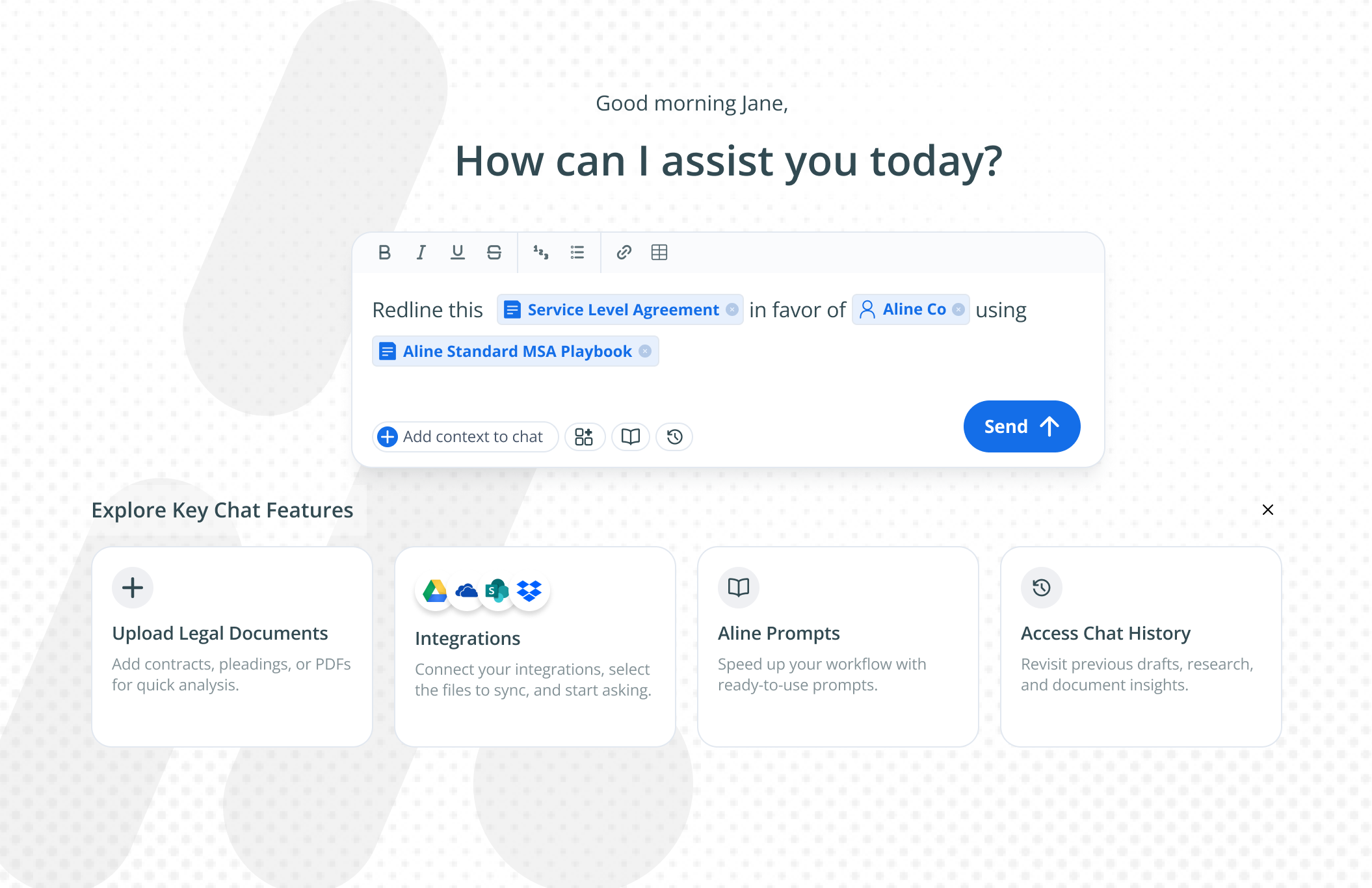
AI that redlines like a human lawyer. Aline suggests fallback clauses, flags risky language, and applies your playbooks automatically. Routine edits happen instantly.
Book a demo to try Aline for free. Explore our AI contract repository and reporting, plus 25% off your first year with code George.
RANKING COPILOT X CHAMBERS
1. Chambers and Partners Opens API to AI-Powered Ranking Submissions

Chambers and Partners announced this week that they have opened their API to integrate with Ranking Copilot, an AI-native platform built specifically for law firm business development. The integration allows firms to sync data directly into Chambers' submission system, use AI-assisted drafting aligned with Chambers' guidance, and automate referee management without manual spreadsheets.
Founded by Dmytro Fedoruk, a former Clifford Chance lawyer, Ranking Copilot targets a workflow that has remained largely manual for decades. For years, law firms have juggled complex referee lists, drafted lengthy narratives, and managed submissions across multiple legal directories using spreadsheets and email chains.
The platform promises to streamline the entire rankings application process - from exporting existing firm data straight into Chambers' system to generating first drafts that follow Chambers' specific submission requirements.
George's take: Rankings do still remain crucial infrastructure for law firms - not just for client acquisition, but also for recruitment. When I was applying for solicitor apprenticeships, every firm's website prominently displayed their Chambers tier one or Legal 500 band one rankings. It was one of the first things I looked at. The rankings ecosystem has been ripe for disruption, and this Chambers API integration might just be the beginning. If Ranking Copilot proves the model works, we'll likely see similar integrations with Legal 500, Best Lawyers, and other directories. The firms that adopt these tools first will gain a submission quality and speed advantage that compounds over time.
OPENAI
2. OpenAI Launches ChatGPT Health - A Blueprint for Legal AI?
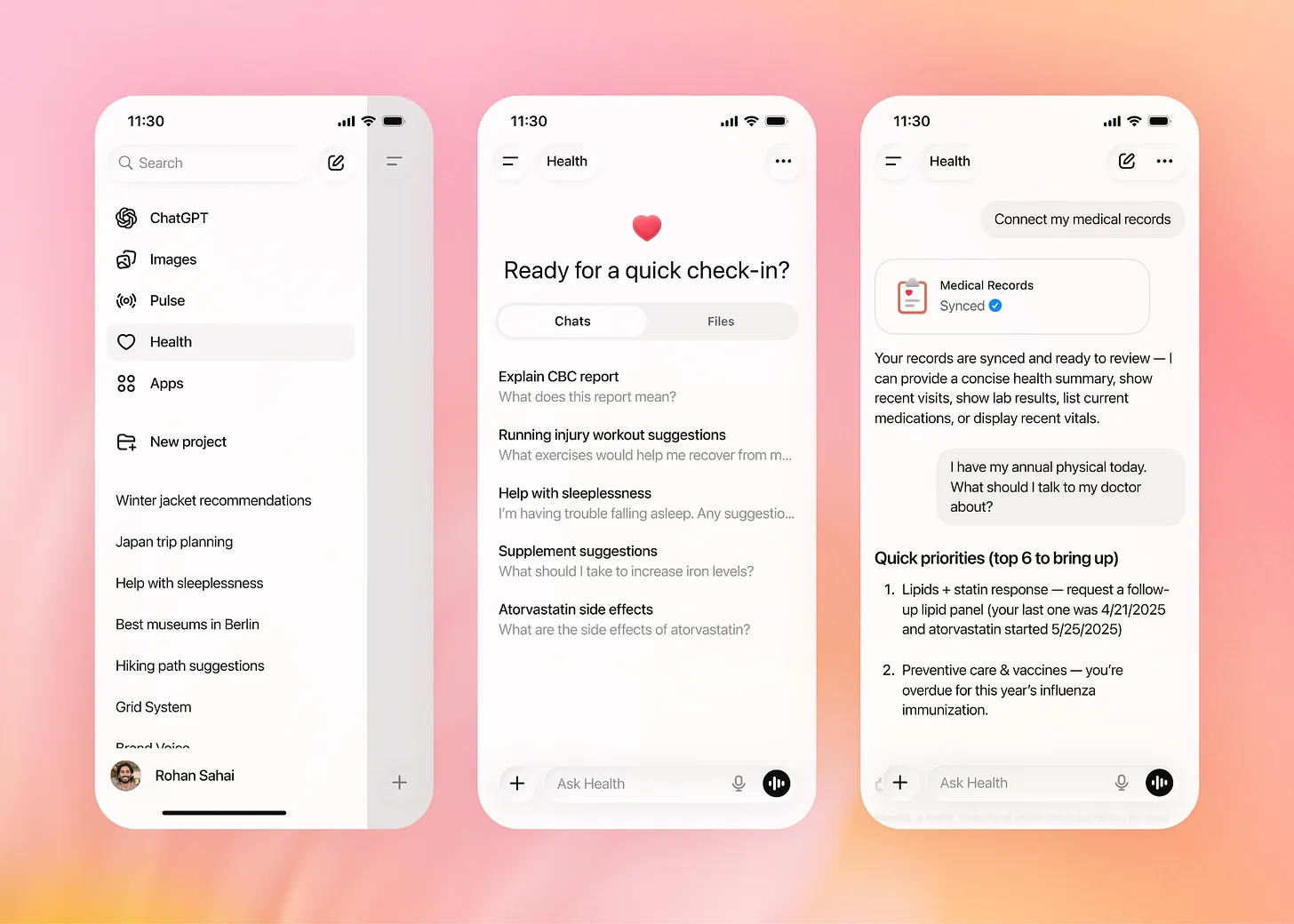
OpenAI launched ChatGPT Health (for consumers) and Healthcare (for B2B) this week, marking its first move into a heavily regulated vertical. The product is explicitly designed to “supplement” - not replace - advice from regulated doctors, with healthcare-grade compliance infrastructure including HIPAA certification, audit trails, and data isolation that meets medical industry standards.
This announcement matters for Legal AI because health and legal share remarkably similar regulatory constraints. Both industries require strict professional standards, have significant liability concerns, and operate under complex regulatory frameworks. Both professions also face similar adoption barriers around trust, professional responsibility, and cultural resistance to machine-driven recommendations.
In the demo, OpenAI shows how it helps patients prepare for medical appointments, and offers guidance on general wellness topics - always with clear disclaimers about its limitations and the need for professional medical oversight.
George's take: If OpenAI can build healthcare-grade compliance infrastructure, they can build legal-grade compliance infrastructure. Right now, specialist Legal AI vendors charge premium prices partly because they've solved privilege preservation between client matters, audit trails that satisfy regulators, data isolation that passes law firm security reviews, and citation verification that reduces liability.
That's what firms are really paying for - not just better AI, but saf(er) AI. OpenAI entering healthcare proves they're willing to build the compliance infrastructure required for regulated industries rather than leaving it entirely to specialist vendors. I think we won't see "ChatGPT Law" as a consumer product - the liability issues are too complex - but perhaps we'll see OpenAI partner with legal AI vendors to bring their compliance playbook into legal services. When that happens, the competitive moat for current legal AI specialists narrows significantly.
HARVEY
3. Harvey Launches Memory Function - But Misses a Bigger Opportunity

Harvey AI introduced a memory function this week that stores matter details, tracks working preferences, and captures approved firm best practices. The feature represents a significant step toward more contextual AI assistance, allowing the platform to remember previous work on similar matters and apply firm-specific guidelines automatically.
The memory system stores information across three layers: matter-level details (parties, transaction structures, key terms), user preferences (preferred drafting styles, citation formats), and institutional knowledge (approved templates, firm best practices, previous precedent).
However, the current implementation focuses primarily on matter-level memory and institutional knowledge while missing a critical component: personal context based on career level and role. A junior associate researching an unfamiliar area needs different outputs than a senior partner reviewing a familiar transaction structure.
George's take: Good memory built into the AI platform is a good step forward, but to make it truly useful, your AI assistant needs to know who YOU are too. For those just starting out in law, like myself, you need cues that not only highlight but articulate the importance of certain points and provide concise directions on the next steps for your research.
For those in the middle of their legal journey, you need the system to connect with your previous case experiences rather than relying solely on generic recommendations.
For experienced lawyers, the true benefit lies in revealing that this particular approach has been explored in various transactions throughout the year and highlighting when you're treading familiar ground versus breaking new ground.
In other AI news: Anthropic Raises $10B at $350B Valuation
![What's Anthropic AI? Here's Everything To Know [2026]](https://substackcdn.com/image/fetch/$s_!1-16!,f_auto,q_auto:good,fl_progressive:steep/https%3A%2F%2Fsubstack-post-media.s3.amazonaws.com%2Fpublic%2Fimages%2F4b46e6ce-686a-49d5-a893-e3fdfb8228b5_1494x840.webp "What's Anthropic AI? Here's Everything To Know [2026]")
Anthropic, the company behind Claude, signed a term sheet this week for a $10 billion funding round at a $350 billion valuation, led by Coatue Management and Singapore’s sovereign wealth fund GIC. The raise nearly doubles Anthropic’s valuation from just four months ago, when it closed a $13 billion Series F at $183 billion in September 2025.
The funding is separate from a recent $15 billion commitment from Nvidia and Microsoft, tied to Anthropic purchasing $30 billion of compute capacity from Microsoft Azure running on Nvidia chips. Anthropic’s run-rate revenue leapt from approximately $1 billion at the beginning of 2025 to over $5 billion by August, with Claude Code generating over $500 million in run-rate revenue.
George's take: This funding round matters for Legal AI because it validates the infrastructure layer itself, not just the vertical applications built on top. Claude powers several legal AI tools and is used directly by thousands of legal professionals. Anthropic's revenue growth from $1B to $5B ARR in under a year demonstrates that foundation model companies can build massive businesses even when competing against OpenAI.
That's everything for this week.
If you enjoyed reading this week's roundup, consider sharing it with a friend.
I'm always looking for how to improve Best Practice. If you have any feedback, good or bad, hit reply to this email and let me know.
See you next week,
George