

This Startup Raised $9M To Build 'Cursor For Lawyers'
Plus: Legora hits $1.8 billion valuation, Perplexity launches Perplexity Patents, and new research challenges legal AI's promises

Sunday, 2nd November 2025. Newsletter #8
Good morning,
Another busy busy week for Legal AI.
New funding rounds from Legora, Perplexity democratises patent research with a free AI agent. And a provocative new paper challenges whether Legal AI delivers any real value once you account for verification costs.
Let's dig in.
Partner content: GrowHub
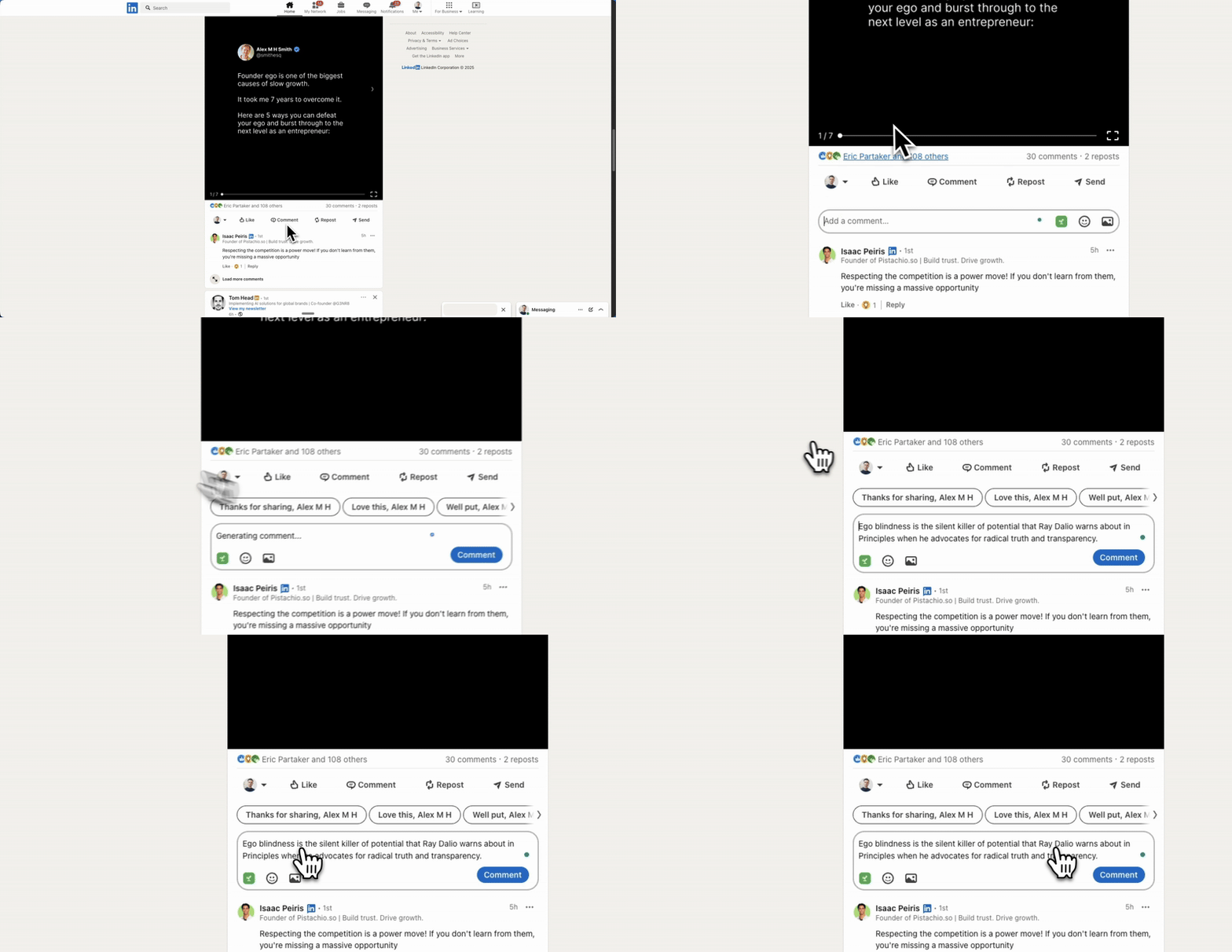
GrowHub’s new comment generator creates thoughtful, contextual LinkedIn comments in seconds, right where you need them.
It’s a Chrome extension, so you just click and generate relevant responses instantly while browsing any LinkedIn post.
No copying URLs, no switching tabs. Just one click and you’re engaging meaningfully.
A game-changer if you want to become a Top Voice through consistent, high-quality engagement.
Try out a free trial here to see if it fits your workflow.
Want to get your brand in front of 600+ of legal professionals? Email george@georgehannah.com
LEGORA & HARVEY
1. Legora closed a $150 million Series C at a $1.8 billion valuation.

Legora closed a $150 million Series C at a $1.8 billion valuation on the 30th October led by Bessemer Venture Partners with significant investment from ICONIQ, General Catalyst, Redpoint Ventures, Benchmark, and Y Combinator. This comes just five months after their $80 million Series B at a $675 million valuation in May, representing a 167% valuation increase in half a year.
Since May, Legora's customer base surged from 250 to over 400 firms, while markets served doubled from 20 to 40+. The platform now partners with heavyweights Linklaters, Cleary Gottlieb, Goodwin, and MinterEllison. The company has scaled to nearly 200 employees across Stockholm, London, New York, Denver, and Sydney - and plans to more than double that by year-end.
Harvey, not to be outdone, has reportedly raised $150 million in a Series F round led by Andreessen Horowitz, pushing its valuation to $8 billion. This was first reported by Forbes and although unconfirmed, this would mark Harvey's third major funding round in 2025 alone, following a $50 million round from EQT Growth and a $300 million Series E at $5 billion in June. Total funding now exceeds $1 billion since Harvey's 2022 founding.
Harvey's annual recurring revenue crossed $100 million in August 2025, more than doubling from $50 million in February. The company employs over 350 people and serves 337+ legal clients globally.
George's take: Let's connect the dots. Legora went from $675M to $1.8B in five months. Harvey went from $3B to $5B to $8B in under a year.
Harvey's proposed $8 billion valuation positions it as one of the most valuable legal tech companies ever, surpassing the market caps of established players like Thomson Reuters Legal (though not the parent company). Legora's rapid ascent signals that European legal AI can compete head-to-head with Silicon Valley.
But the winner won’t be whoever raised the most money or signed the most logos first. It will be whoever builds the most intuitive workflows that genuinely fit into lawyers’ daily routines, the deepest feature set that solves real pain points beyond basic document drafting, and the tightest integrations with the tools lawyers already use - iManage, NetDocs, Outlook, and practice management systems.
PERPLEXITY
2. Perplexity Soft-Launches Perplexity Patents
Credit: Perplexity Labs
On 30th October, Perplexity launched Perplexity Patents - the world's first AI patent research agent designed to democratise intellectual property intelligence. The platform launches globally as a free beta, with Pro and Max subscribers receiving expanded usage limits.
Users can simply ask: "Are there any patents on AI for language learning?" or "Key quantum computing patents since 2024?" The system automatically interprets queries, returns relevant patent collections, provides inline viewers, and links directly to original documents.
The breakthrough lies in semantic understanding. Unlike keyword-based systems that only find exact matches, Perplexity Patents surfaces conceptually related inventions. A search for "fitness trackers" also identifies patents about "activity bands," "step-counting watches," and "health monitoring wearables" - even when those exact terms aren't present.
Perplexity CEO Aravind Srinivas positioned this as "the first of many vertical deep research experiences we will build for lawyers, doctors, financial services, academic researchers."
George's take: Patent research has traditionally required specialised platforms like Derwent Innovation, PatSnap, and LexisNexis PatentSight. Perplexity Patents offers a natural language alternative that’s free during beta, lowering the barrier to entry for preliminary searches.
For in-house counsel and product teams, this creates new opportunities. Preliminary patent searches that might have required outside counsel for basic scoping can now be explored internally. Teams can conduct initial novelty checks or freedom-to-operate assessments before deciding whether to invest in comprehensive professional opinions.
Perplexity CEO Aravind Srinivas explicitly framed this as “the first of many vertical deep research experiences” for professionals, suggesting the company has broader ambitions in legal, medical, and financial research.
VERIFICATION PARADOX
3. New Paper Challenges Legal AI's Core Value Proposition
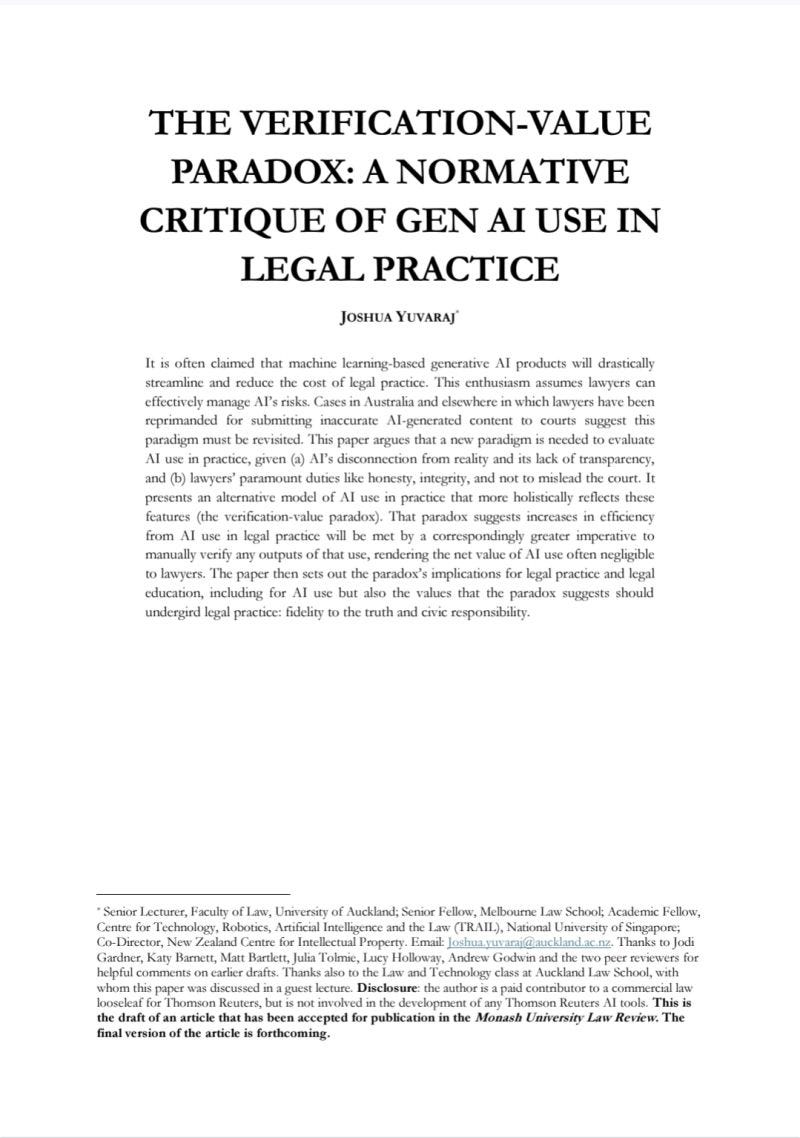
A provocative new academic paper published on SSRN this month argues that Legal AI may deliver far less value than the industry claims. Joshua Yuvaraj of the University of Auckland Faculty of Law presents "The Verification-Value Paradox: A Normative Critique of Gen AI in Legal Practice," forthcoming in the Monash University Law Review.
Yuvaraj identifies a fundamental tension between AI's technical limitations and lawyers' professional obligations. Generative AI suffers from two critical flaws: (1) disconnection from reality and lack of transparency, and (2) a tendency to hallucinate facts and fabricate citations. Meanwhile, lawyers have paramount duties of honesty, integrity, and not misleading courts.
The paper draws on recent cases in Australia and elsewhere where lawyers were reprimanded for submitting inaccurate AI-generated content to courts. Rather than treating these as isolated incidents of negligence, Yuvaraj argues they reveal a structural problem - the more lawyers rely on AI to streamline work, the more time they must spend verifying that work is accurate.
This creates what the paper calls the "verification-value paradox" - a dynamic where AI adoption creates a verification burden that consumes the time savings AI was supposed to deliver.
George's take: The study’s findings are stark, but I’m more optimistic.
The verification paradox is not uniformly distributed across legal tasks. The paper's analysis applies most strongly to high-stakes, court-facing work where hallucinations carry catastrophic risk. But it applies less to internal research memos, contract drafting, due diligence summaries, and client communications - where verification requirements already existed before AI
The paper also misses an important counter-argument: the verification burden already exists in traditional legal work. When a junior associate drafts a memo, partners verify it. When paralegals conduct research, associates verify it. AI doesn't create verification requirements - it redistributes them.
VESENCE
4. Vesence Raises $9M to Build "Cursor for Lawyers"
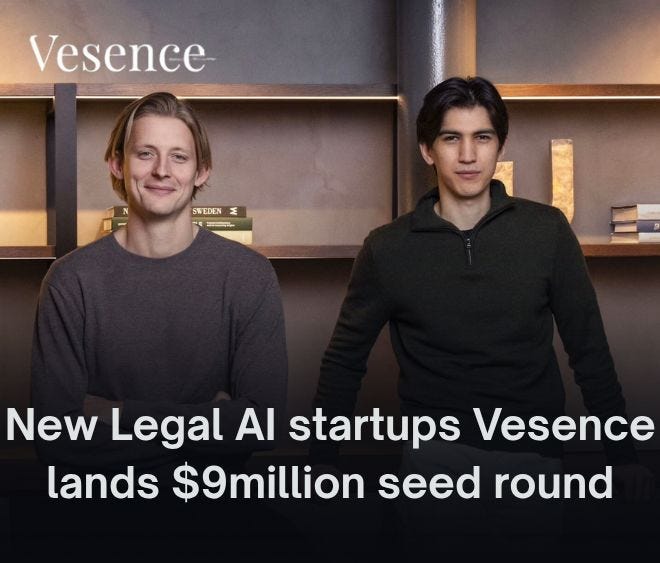
Swedish legal tech startup Vesence announced a $9 million seed round on 28th October, led by Emergence Capital with participation from Creandum, Y Combinator, and 20VC. Angel investors include Y Combinator co-founder Paul Graham, Lovable founder Anton Osika, and Ironclad founder Jason Bohemig.
Vesence positions itself as building "Cursor for Lawyers" an AI agent platform embedded directly inside Microsoft Word and Outlook that reviews documents, emails, and projects before clients see them. The Stockholm-based company was founded by Henrik Hansson and Ludvig Swanström, who previously worked together at YC-backed startup Depict.
The platform focuses on verification and quality assurance rather than content generation. Vesence agents sanity-check work against firm best practices, style guides, formatting requirements, and connected documents - catching defined term slips, bad cross-references, logical gaps, and miscalculations within and across documents.
George's take: Vesence is targeting the exact problem identified in the verification paradox paper - and their $9M seed round suggests investors believe they've found a solution.
What's clever about Vesence's positioning is the Cursor comparison. Cursor revolutionised software development by making AI an active participant in code quality, not just code generation. Developers love Cursor because it catches errors in real-time, suggests improvements, and maintains consistency - reducing debugging time.
Vesence is betting lawyers want the same. Not an AI that spits out contract first drafts, but an AI that acts as a safety net that catches human error.
In other AI news: See the future of your joints
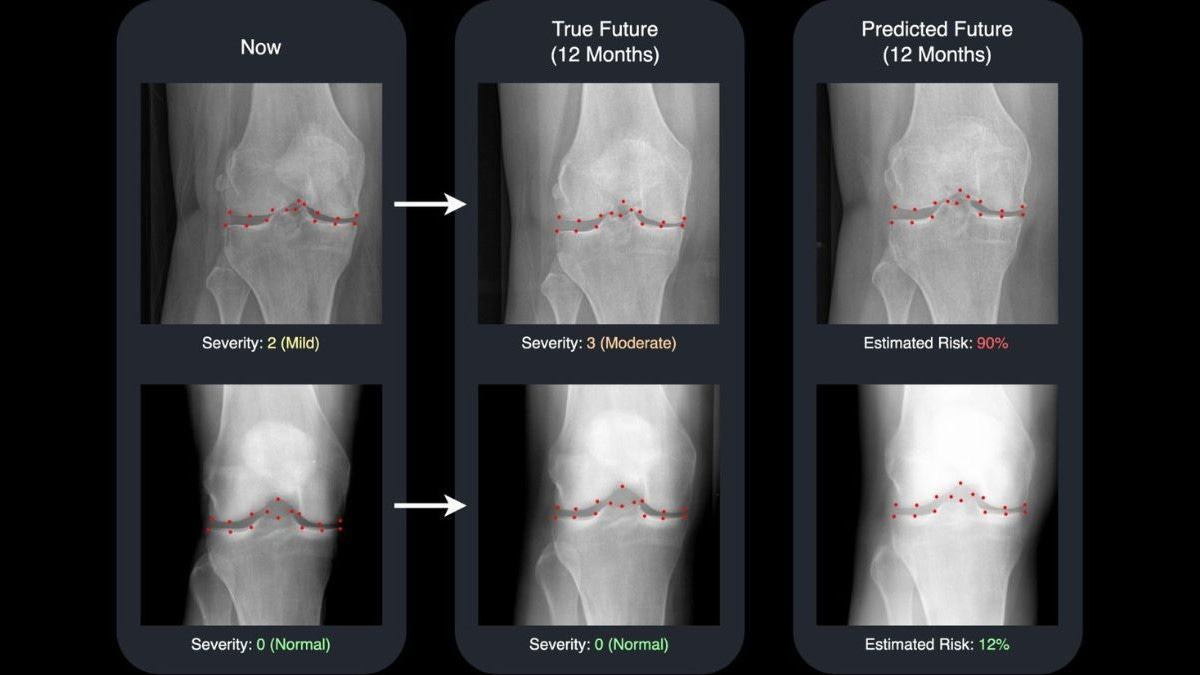
Researchers at the University of Surrey have developed an AI system that predicts what a patient's knee X-ray will look like in one year, enabling doctors to track osteoarthritis progression before it happens.
The tool provides both a visual forecast and a risk score, offering doctors and patients a clearer understanding of disease trajectory.
The research team suggests the technology could soon expand beyond arthritis to predict progression in lung disease, heart conditions, and other chronic illnesses where early intervention changes outcomes.
George's take: The legal profession should watch how medicine integrates predictive AI. The barriers are similar: regulatory scrutiny, professional liability concerns, and cultural resistance to machine-driven recommendations.
That's everything for this week.
If you enjoyed reading this week's roundup, consider sharing it with a friend.
I'm always looking for how to improve Best Practice. If you have any feedback, good or bad, hit reply to this email and let me know.
See you next week,
George
Hi! I'm Harshith. I write on VC and Startups in the LegalTech sector. I've written an article as well analyzing Perplexity latest LegalTech product. (Perplexity Patents)
https://open.substack.com/pub/harshithviswanath/p/perplexity-launches-perplexity-patents?utm_source=share&utm_medium=android&r=4y4gfu