

Freshfields Goes All-In On Anthropic
Plus: Legora bolts on Qura, Sullivan & Cromwell's AI apology, and the man who priced 6,500 pints with Claude

Hey happy Sunday,
A consequential week. One firm leaned further into AI; another one wishes it had leaned less. There's a Stockholm acquisition, a new UK code of practice, and a man who used AI to call 6,500 pubs.
Let’s dig in.
Partner Content
This edition is brought to you by Aline.
Aline handles routine reviews of NDAs, order forms, and standard MSAs, automatically applying your playbook. Your team spends their hours on the work that actually needs a lawyer, not copy-paste edits.
Book a demo to try Aline for free. Explore our AI redlining and get 25% off your first year with code George.
This Week in Legal AI
Freshfields goes wall-to-wall with Claude
Freshfields and Anthropic announced a multi-year agreement to deploy Claude across the firm’s 33 offices and all 5,700 employees, with the two committing to co-develop legal-focused agentic workflows over the next twelve months.
Freshfields will receive early access to future Anthropic models and plans to roll out Cowork - Anthropic’s agentic platform - once it has cleared internal security and training frameworks. Within six weeks of opening internal access via the Freshfields Lab, the firm reported that Claude usage rose by roughly 500 percent.
The detail
This is the second strategic AI partnership Freshfields has signed inside a year. Last year it announced a wide-ranging deal with Google around Gemini and Google Cloud; the firm’s Chief Innovation Officer, Gil Perez, has been explicit that the strategy is one of “optionality” - refusing to bet the firm’s AI stack on any single provider. The Anthropic deal sits alongside Freshfields’ role as an early tester of the next generation of Thomson Reuters’ CoCounsel Legal, which has been rebuilt on Anthropic’s models with Westlaw and Practical Law natively embedded.
So Freshfields is now, in effect, running three parallel AI relationships at once: a hyperscaler (Google), a frontier lab (Anthropic), and an established legal data vendor (Thomson Reuters).
There is also a co-development piece that not many seem to be talking about. Freshfields’ in-house legal team will collaborate with Anthropic’s in-house team to design AI workflows that Anthropic itself will then use to procure legal services from the firm. It is a closed loop - Freshfields builds the workflows that deliver legal advice to Anthropic, using Anthropic’s own technology, with Anthropic’s product team in the room. Whatever else this is, it is not a vendor relationship in the traditional sense.
Why it matters
This is a strong signal about how the largest law firms are now buying AI. Just a couple years ago the assumption was that Big Law would consume legal AI through specialist vendors: Harvey, Legora, Luminance, Robin (RIP), and so on.
What Freshfields is doing - and what every other Magic Circle and US BigLaw firm will inevitably consider - is going closer to the source. It’s a no brainer if you can sit at Anthropic’s product table, get early access to the models, and co-build the workflows on your own terms.
That does not mean the legal AI vendors are finished — they almost certainly are not. They still have data, workflow expertise, and customer relationships that a frontier lab cannot replicate very quickly.
Best Practice Podcast
Last week I sat down with Dillon Harindiran for the latest episode of the Best Practice Podcast. We discussed why context is the most important feature in Legal AI. If you missed it, it is now live on Spotify, Apple Podcasts, and at bestpractice.media.
Do you know someone that would like to be featured on the Best Practice Podcast? Email me at george@georgehannah.com
Worth Knowing
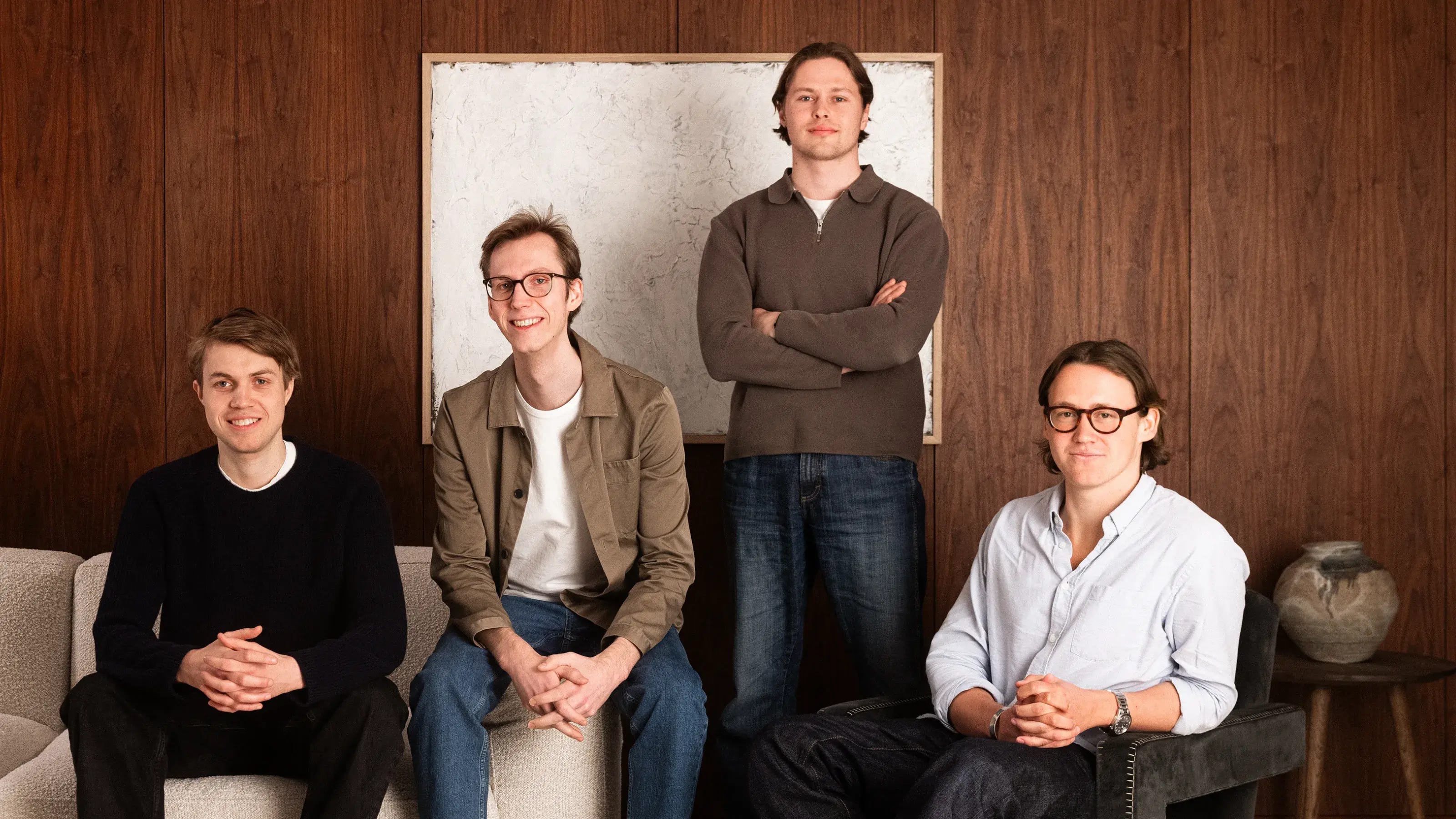
Legora acquires Qura. Stockholm-based Legora announced the acquisition of fellow Stockholm legal research start-up Qura. Qura, a roughly ten-person team founded in 2023 and focused mostly on EU competition law across 27 jurisdictions, has been growing revenue at around 40 per cent month-on-month. The deal follows Legora’s acquisition of Canadian start-up Walter last month, and arrives just weeks after the firm’s $550m Series D at a $5.55bn valuation. This is Legora doing what well-funded startups always do: buying a credible challenger before it grows into a credible threat, and bolting on the legal research layer it lacks.
The UK gets its AI Code of Practice. On 16 April the Secretary of State made the Data Protection Act 2018 (Code of Practice on Artificial Intelligence and Automated Decision-Making) Regulations 2026 (SI 2026/425), which come into force on 12 May. The Regulations require the Information Commissioner to prepare a code of practice on the processing of personal data in connection with developing and using AI and automated decision-making, with specific guidance on children’s personal data. For in-house teams already navigating the Data (Use and Access) Act 2025 and the EU AI Act timetable, this is one more piece of the UK’s emerging AI governance architecture.
Funding & New Partnerships
Luminance and LexisNexis. The two announced a strategic alliance that embeds LexisNexis’ Protégé AI assistant inside Luminance’s contract platform. This means that in-house legal teams using Luminance’s Lumi assistant can now ask legal questions and receive answers grounded in LexisNexis case law, statutes and Shepard’s citations, with a click-through into Lexis+ for deeper analysis. Neither side disclosed commercial terms or how the integration will be priced for customers who only subscribe to one product. The deal is non-exclusive on both sides. It mirrors the structure of the Harvey/LexisNexis arrangement signed last year, and is part of a broader pattern in which legal AI platforms are racing to bolt on authoritative citation layers in response to in-house buyers’ hallucination concerns.
A new alliance with a familiar pitch. Hogan Lovells, Cadwalader and a dozen or so others, announced the launch of the Global Legal Tech Alliance. The stated aim is to give law firms a more active role in shaping AI-enabled legal services through shared standards, joint development of solutions and a training arm called the GLTA Academy. The pitch — that firms hold the data, the workflow expertise and the professional standards to lead on this — is a thinly veiled response to the foundation labs and legal AI vendors moving aggressively onto firm turf.
Freshfields and Anthropic. Covered in the lead piece above. Multi-year deal, 5,700 seats, 33 offices, Cowork rollout, co-development programme, and early access to future Anthropic models.
From the Courtroom
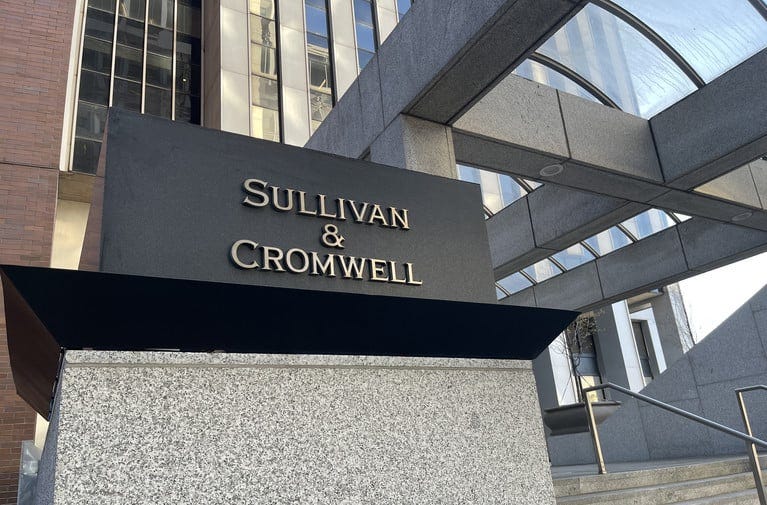
Sullivan & Cromwell, one of the most prestigious firms on Wall Street, wrote to a New York bankruptcy judge to apologise for an emergency motion it had filed ten days earlier. The motion was riddled with errors generated by AI — fake case citations and inaccurate quotes. The mistakes had been picked up not by S&C, but by the lawyers on the other side, at Boies Schiller Flexner.
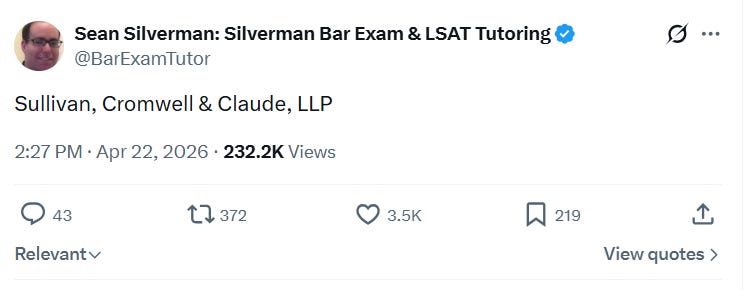
The firm has not been sanctioned. The partner in charge, Andrew Dietderich, said S&C does have internal AI safeguards, but they were not followed when the document was prepared. The story has still landed hard, for two reasons. First, the firm itself: S&C partners charge close to $2,000 an hour, and S&C is outside counsel to OpenAI on its “safe and ethical” deployment of AI. Second, the underlying case — it involves the unwinding of an alleged Cambodian forced-labour scam compound, where the firm is trying to trace billions of dollars in crypto to compensate victims. The errors set the case back by around two weeks.
The takeaway is the one the profession keeps having to relearn: a firm-wide AI policy is only as good as the lawyers who actually follow it on the day.
In Other AI News

Matt Cortland, an American AI engineer based in London, has done what no government statistician has been willing to do since 2011 — he has measured the price of a pint of Guinness. After being charged €7.80 in a Dublin pub last month, Cortland built an AI voice agent named Rachel using ElevenLabs, fed the responses into Claude, and pointed it at every pub he could find. The Irish version of the resulting “Guinndex” launched in March; the UK edition went live this week, covering around 6,500 venues.
The average UK pint is now £5.82. London averages £6.72; Scotland £5.20. There is a clean north–south split — the so-called “Guinness Equator” running roughly through Oxford, Cambridge and Norwich — with everywhere south of it averaging at least 73p more than everywhere north. The most expensive pint in the country is £10 in Maldon; the cheapest is £2.50 at a Wetherspoons in Sittingbourne. Only around 4 per cent of the bartenders Rachel called realised they were speaking to an AI.
For a profession that spends a lot of its time worrying about the displacement effects of generative AI on knowledge work, there is something useful in this small case study. The most interesting AI deployments are still the ones that solve a specific, knowable problem — and the bartenders, as Cortland points out, are not the ones being displaced. They are the data source.
You can check out the “Guinndex” mapping the pint of a Guinness here.
That’s it for this week. Thanks for reading.
If you found this useful, do forward it on to a colleague who would too.
Want to introduce yourself? Simply hit reply to this email. I read every email.
Until next week,
George