

"Replace Your $15,000 Legal Bill With A Prompt"
Law Twitter is back.

Hey, happy Sunday.
A slightly shorter edition this week, but there's still plenty worth your time.
From a viral X post that gets something fundamentally wrong about legal drafting, to a Scottish sheriff's warning shot on AI hallucinations in court, to Harvey's expanding sports sponsorship portfolio.
Let’s dig in.
Sponsor Best Practice
Sponsor Best Practice and get your brand in front of 1,700 engaged legal professionals.
This Week in Legal AI
The Prompt That Went Viral
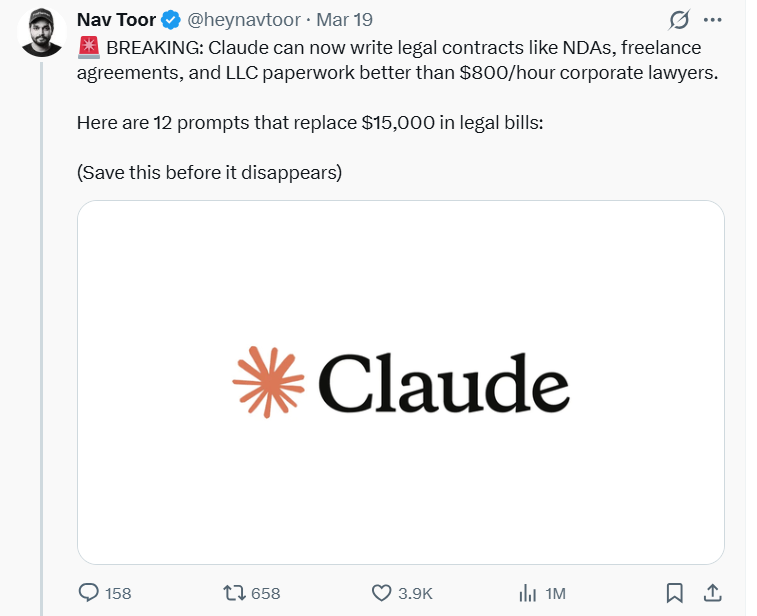
A post has been doing the rounds on X this week. Nav Toor - a content creator who tailors prompt-heavy content to different professional audiences - shared a thread of twelve prompts sharing that Claude can now write legal contracts better than $800-an-hour corporate lawyers. The thread promised to replace $15,000 in legal bills. It was packaged with the classic viral hook. The post racked up significant engagement.
Each prompt is structured around a senior lawyer at a recognisable firm. The Skadden Arps NDA drafter. The Sullivan & Cromwell partnership agreement. The Latham & Watkins employment contract. The instructions are detailed - covering defined terms, carve-outs, governing law, remedies, signature blocks - and the output, as Toor presents it, arrives as a complete, ready-to-sign document. The targets are exactly the kinds of agreements a small business owner or early-stage founder might otherwise pay a lawyer to produce: NDAs, LLC operating agreements, freelance contracts.
Why It Matters
Lawyers don’t draft from scratch. They work off precedents - trusted, battle-tested templates that have been refined over years of negotiation, litigation, and client feedback. The lawyer’s job is to adapt it intelligently to the specific situation, applying judgment about what needs to change and, crucially, what should stay exactly as it is.
I also feel like this is part of a broader shift on X becoming the place where legal AI conversation is actually happening. I feel this was catalysed by Zack Shapiro’s “Claude Native” law firm post that went viral a few weeks back. There now seems to be a sustained, growing ecosystem of commentators, founders, practitioners, and technologists who are debating the space in real time. New voices have emerged noticeably quickly. The density of legal AI content on the platform feels different to how it did even a fortnight ago.
Worth Knowing

Tristan Sherliker, an IP solicitor at Bird & Bird, has launched BunTool, a free desktop application that automates the creation of PDF bundles for court proceedings including paginated, hyperlinked, bookmarked, and indexed pages ready for court use. He says on his website that this has not been vibe coded except for a bit of Claude on the front-end design.
Best Practice Podcast
Best Practice is looking for new guests to feature on the podcast.
If you know anyone / you are knowledgeable in legal AI or have a really cool story, then please get in touch at george@georgehannah.com
Funding & New Partnerships
The Financial Times has chosen Wordsmith as its enterprise legal AI platform. The Edinburgh-based startup, which has grown tenfold in revenue over the past year, will power the FT’s entire legal, compliance, and company secretarial function. I spoke to CEO Ross McNairn on their insane growth earlier this year.
Harvey has been named the Official and Exclusive Legal AI Partner of the Dallas Mavericks under a new multi-year partnership that also covers American Airlines Center, with high-visibility signage at home games throughout the NBA season. The deal is tied to Harvey’s planned Dallas office opening in April, as the company deepens its footprint in the Texas legal market.
Harvey also announced a further multi-year partnership with Fulham FC, becoming the Club’s Official Legal AI Partner - with branding at Craven Cottage across men’s and women’s fixtures.
Newcode, the Norway-based legal AI platform, has raised $6.5m in a round that included law firms, The Legal Tech Fund, and Alliance VC. CEO Maged Helmy has positioned the company as building an AI-native operating system for legal - with the round earmarked for expanding its infrastructure and enterprise capabilities across Scandinavia and beyond.
From the Courtroom
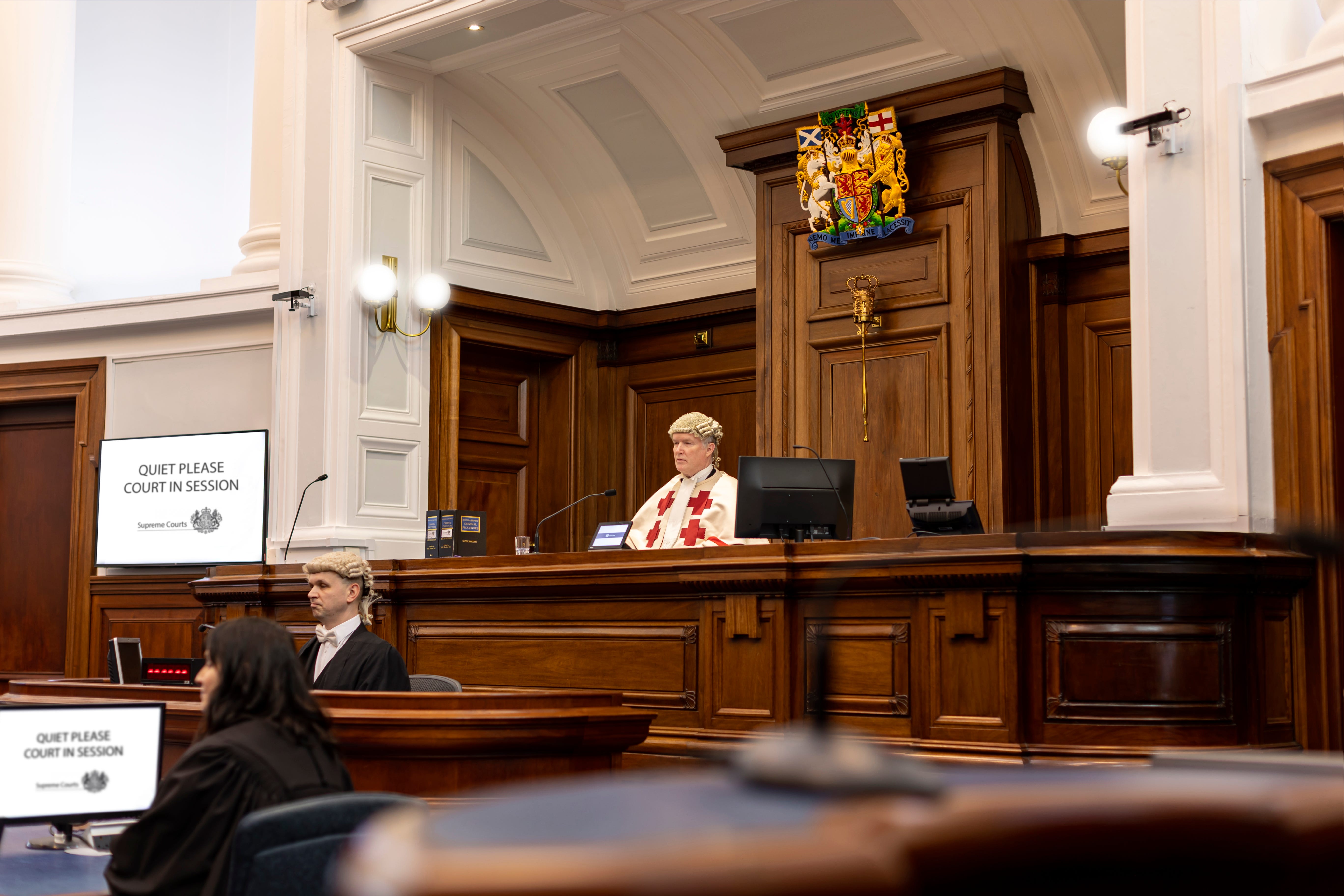
A Scottish sheriff court has issued what is believed to be the first warning of its kind in Scots law after a landlord submitted AI-generated legal references that turned out to be entirely fictitious. A property company seeking to recover £5,000 in rent arrears cited the Interest on Debts (Scotland) Act 1985 - a piece of legislation that does not exist - alongside fabricated tribunal decisions.
Sheriff John MacRitchie stopped short of a contempt finding, ruling that the company had not “knowingly” attempted to obstruct justice, but warned that the lodging of false legal references has the potential to do exactly that.
The Kirkcaldy ruling follows a growing body of similar incidents across jurisdictions. A lawyer in Haringey faced action after submitting fabricated legal citations. In the US, the New York sanctions case from 2023 remains the most prominent example. Over 700 instances of AI-generated hallucinations have now been recorded in legal filings - a figure that is almost certainly an undercount. The pattern is becoming harder for the judiciary to ignore, and formal guidance from bar associations and court rules committees is likely to follow.
For lawyers, the lesson is unchanged but bears repeating: AI output in legal proceedings must be verified. Not skimmed. Verified.
In Other AI News: How do you feel about AI Matchmaking?
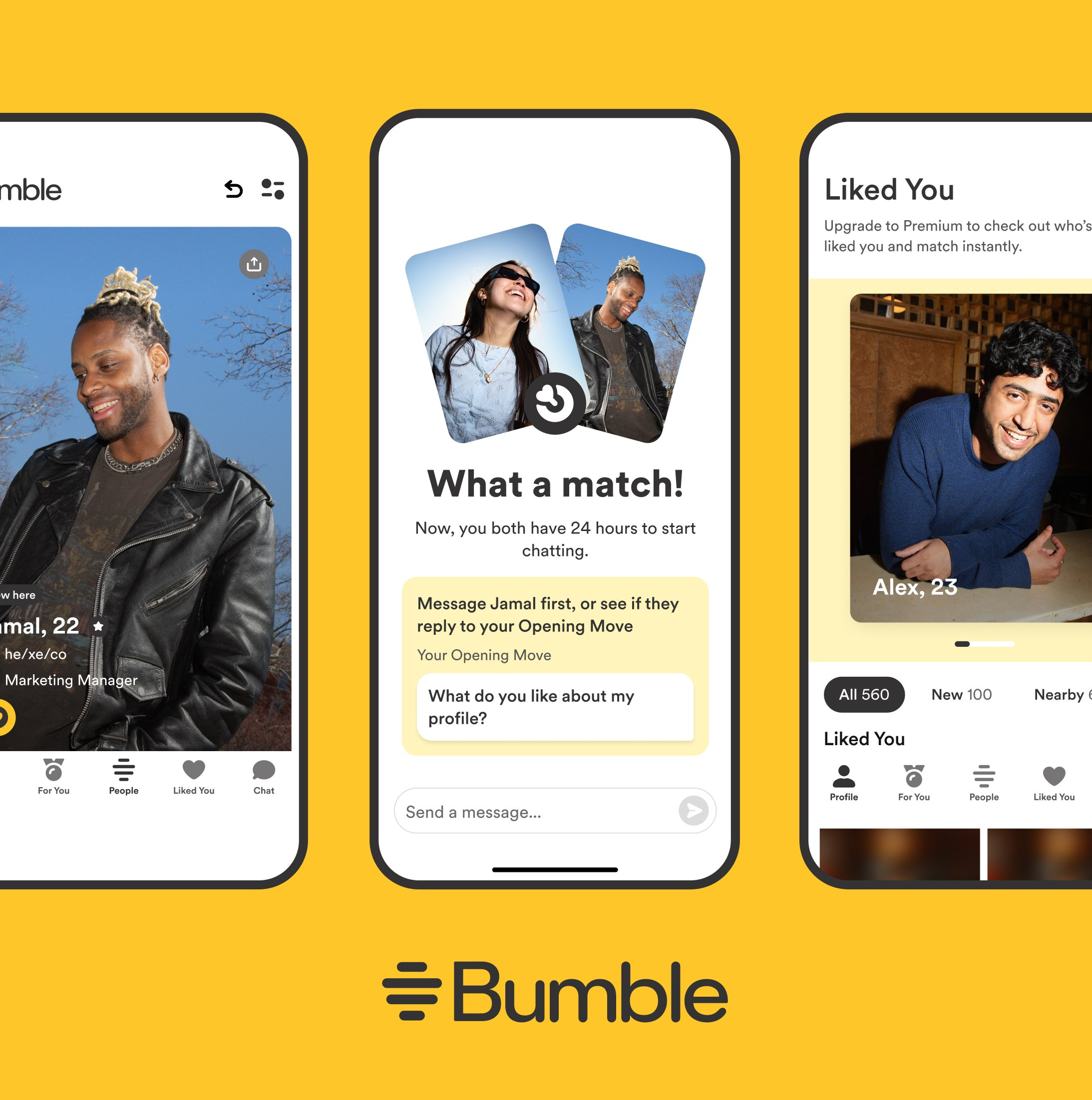
Dating apps have had a difficult few years with younger users, and Bumble has felt it more acutely than most. Its answer, unveiled earlier this month, is an AI assistant called Bee.
Bee begins with a private, in-depth conversation that explores values, relationship goals, communication style, lifestyle, and dating intentions. When it identifies two users who are aligned across those dimensions, both are notified with an explanation of why they’re a strong match.
The swipe, in other words, is being quietly retired in select markets - replaced by an AI matchmaker that has actually learned what you want from a relationship.
The financial markets liked it: Bumble’s stock surged approximately 40% following the Q4 earnings announcement at which Bee was unveiled, with revenue coming in at $224.2 million for the quarter. Whether Bee actually produces better relationships is, for now, a secondary question. That it produced a 40% stock rally suggests investors are willing to believe it might.
That’s everything for this week. As always, thank you for reading. Best Practice is approaching 2,000 subscribers, which still surprises me every time I look at it.
If you found this useful, forward it to a colleague who works in or around legal AI. It takes ten seconds and genuinely helps.
Until next week,
George