

The Hargora Hoax: Fiction, But Not Entirely Wrong
Crosby raises $60M, Legora hits $100M ARR, and Harvey signs PSG - but a fictional merger website stole the week

Hey, happy Sunday.
And happy new financial year! I posted a LinkedIn recap earlier this week covering some of the biggest mergers and acquisitions from Q1 that you might find interesting.
Partner Content
This edition is brought to you by Aline.
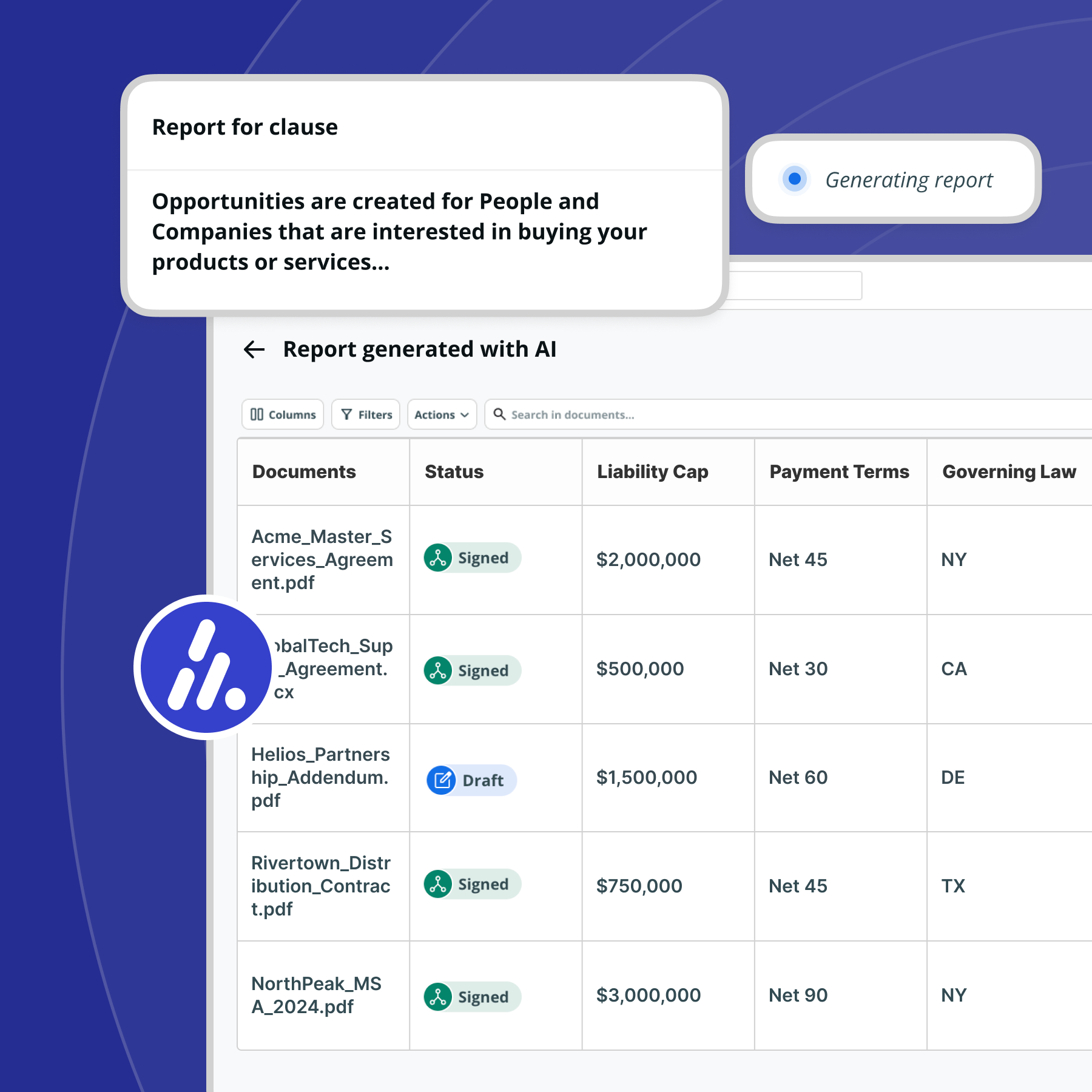
Know what’s in every contract without opening a single file. Aline scans your full portfolio and surfaces obligations, exposures, and risks, so when the CFO asks, “What are we exposed to?” you have the answer in seconds.
Explore Aline’s AI Contract Intelligence, plus 25% off your first year with code “George”
This Week in Legal AI
What If Harvey and Legora Actually Merged?
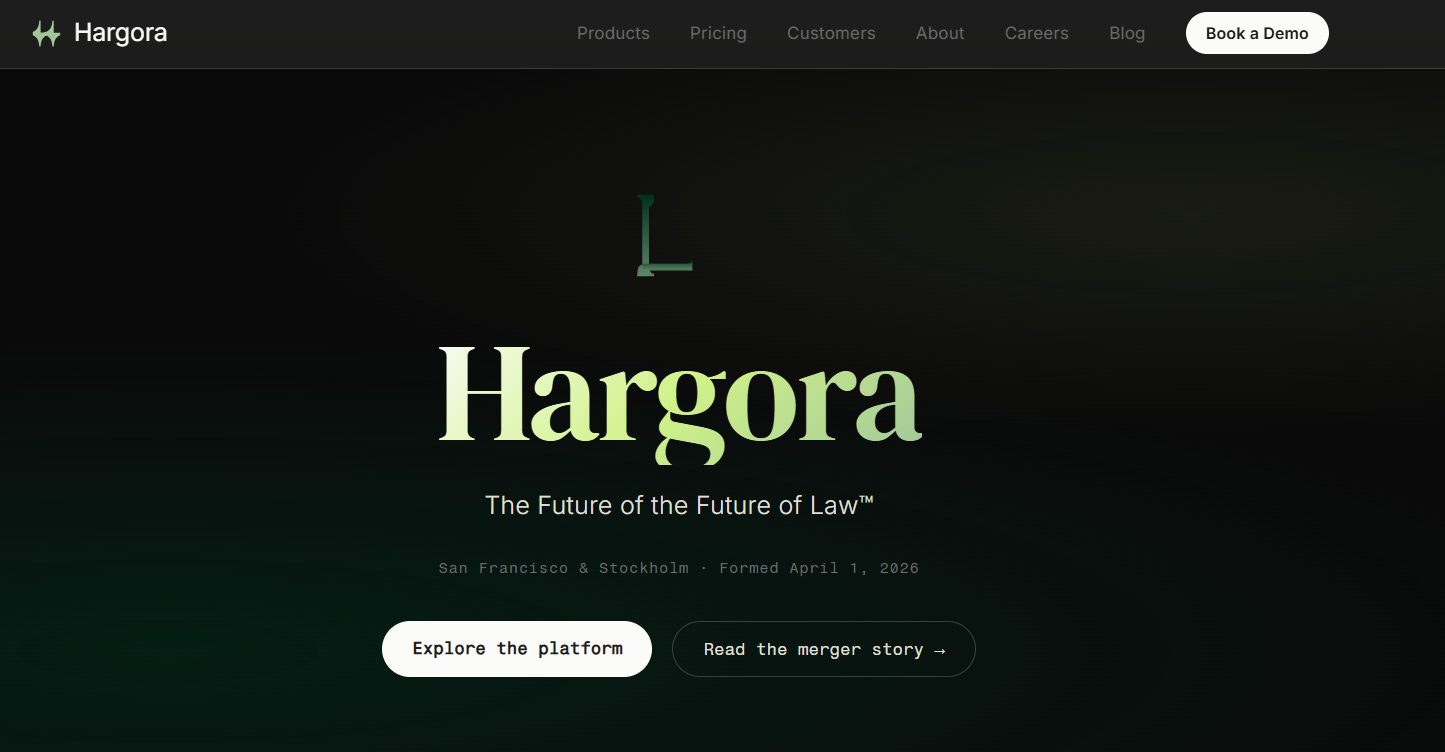
On 1 April, Alex Denne - moderator of the r/legaltech subreddit - launched hargora.com, a fully built a fictional website announcing the merger of Harvey and Legora into a combined entity called “Hargora.” It was, of course, an April Fools’ joke. But it was an extraordinarily well-executed one - and buried inside were some observations sharp enough to merit a proper look.
It features a (fictional) combined valuation of $24.8 billion (”11 + 5.5 + hype = 24.8”), two co-CEOs reporting to each other, a product called “Legacy Mode” - described as “AI that makes itself look worse so partners feel better” - and a customer page that reads: “We ran out of law firms.” The FAQ section notes that both co-CEOs have described their respective company as “the acquirer.” There is merch too.
The Pros and Cons of a Merger
On one hand, a combined entity would be formidable - roughly $300 million in ARR, over 1,800 clients, and a global footprint. You’d eliminate the duplication of two companies spending heavily to build functionally similar products for the same firms. A single platform could invest more in R&D, negotiate harder with foundation model providers (therefore cheaper for everyone), and simplify procurement for the many firms currently running both tools side by side.
On the other hand, it’s that very competition that’s been pushing both companies to ship fast and improve relentlessly. Remove it, and you risk the complacency that comes with any unchallenged market position. Firms would also lose negotiating leverage overnight - when your two main options become one, pricing conversations get a lot less comfortable.
In practice, it almost certainly couldn’t happen. Two companies at this scale, building the same product for the same clients, would face serious antitrust scrutiny on both sides of the Atlantic. But the fact that both are converging so rapidly; similar clients, same trajectories, same shift toward agentic workflows - tells you something about where this market is heading. There are over 500 legal AI vendors today. There won’t be for long.
Best Practice Podcast
This week’s episode features Cecilia Zeniti, CEO and Co-founder of GC AI.
Cecilia must be one of the most customer-obsessed founders I’ve met, and she has some really interesting views on where the market is heading, definitely worth a listen.
Want to be our first sponsor for the Best Practice Podcast? Get in touch here.
Worth Knowing
Sequoia says the next trillion-dollar company will sell services, not software. Sequoia partner Julien Bek published a widely discussed essay arguing that the real opportunity in AI lies not in copilots - tools that assist professionals - but in “autopilots” that sell the work itself. His thesis: for every dollar spent on software, six are spent on services, and AI is now capable enough to absorb the labour budget directly. The legal sector features prominently in his analysis, with Sequoia estimating roughly $60 billion in outsourced legal work is ripe for AI-powered automation. Notably, Sequoia is an investor in both Harvey (copilot) and Crosby (an autopilot law firm) - two very different bets that may converge.
LawFairy goes live - and it doesn’t use AI in the way you’d expect. LawFairy, the deterministic legal intelligence platform, officially went live on 2 April, focusing initially on UK immigration law. This is now only the second technology-only firm authorised by the SRA to deliver legal advice, following Garfield’s approval last year. The distinction is important - LawFairy’s system uses pre-validated legal rules encoded into structured decision pathways, not large language models. The same facts produce the same result every time, with a complete audit trail. Founded by Raj Panasar, a former partner at Hogan Lovells and Cleary Gottlieb who taught himself to code, LawFairy has already partnered with Hogan Lovells and Central England Law Centre on a pro bono initiative helping undocumented children navigate British nationality law.
Legora crosses $100 million in annual recurring revenue. The Swedish legal AI platform announced this week that it has passed the $100 million ARR mark, up from $1 million just eighteen months ago. That growth rate places it among the fastest-scaling enterprise software companies of the post-generative AI era. Legora now serves over 1,000 customers across 50 markets, including White & Case, Linklaters, and Barclays. The race is well and truly on.
Funding & New Partnerships
Crosby raises $60 million in Series B funding. The AI-native law firm, which pairs licensed attorneys with proprietary AI to review commercial contracts at fixed per-document pricing, raised its Series B co-led by Lux Capital and Index Ventures, with participation from Sequoia, Bain Capital Ventures, and Elad Gil. Crosby has now raised $85.8 million in total. The firm says the value of its negotiated contracts has climbed from $30 million to over $1 billion since coming out of stealth. Its founders also took a pointed shot at Big Law’s lack of R&D spend, noting that America’s top 100 firms made $69 billion in profit last year - more than Google’s R&D budget - with every cent paid out to partners.
Harvey partners with Paris Saint-Germain. In a multi-year deal, Harvey becomes PSG’s Official Legal AI Partner. The club’s in-house legal team will use the platform across its legal workflows, and Harvey will gain matchday visibility at the Parc des Princes through in-stadium and broadcast-visible branding. The move coincides with Harvey’s planned Paris office opening and follows similar sports partnerships - including its existing deals with Fulham FC and the US Open. Legora has also moved into brand partnerships, signing Swedish golfer Ludvig Åberg. Legal AI companies sponsoring football clubs is a sentence I never expected to write, but here we are.
Got news to share? Send me a message using the button below:
From the Courtroom

A judge at Bournemouth Family Court has publicly named a barrister who cited four completely made-up cases in a skeleton argument - all of which had been generated by an AI tool. Layla Parsons, who is an unregistered barrister but had been offering paid legal work to members of the public, used the fabricated citations in a children’s welfare case. When the fake cases were discovered at a hearing in January, she apologised and said she hadn’t realised the AI tool could produce incorrect information.
The judge, Recorder Howard, accepted that she hadn’t set out to deliberately mislead the court. But he was concerned that she still didn’t seem to grasp how serious the mistake was. Because she had been holding herself out as a lawyer and offering paid services, he decided the public interest in naming her outweighed her request for anonymity. She has since self-reported to the Bar Standards Board.
It’s one of the first reported UK cases where a legal professional has been publicly named for submitting AI-hallucinated authorities - and a reminder that, however useful these tools can be, the responsibility for checking what you put before a court still sits squarely with you.
In Other AI News

OpenAI acquired TBPN - the daily tech talk show hosted by entrepreneurs John Coogan and Jordi Hays - in what is the AI company’s first foray into media ownership. The show, which has been described as “SportsCenter for Silicon Valley,” has drawn guests including Mark Zuckerberg, Satya Nadella, and Sam Altman himself. It is reportedly on track to pull in over $30 million in advertising revenue this year.
The deal has raised eyebrows. TBPN will report to Chris Lehane, OpenAI’s chief global affairs officer, and while the company has promised editorial independence, the optics of an AI company on the brink of an IPO buying a show that frequently discusses its own industry haven’t escaped notice. CNN’s framing was the sharpest: “Elon Musk has X. Now Sam Altman has TBPN.”
Whether this is savvy communications strategy or an uncomfortable blurring of editorial lines probably depends on your priors. But it is, at minimum, a sign that AI companies are no longer content to be the subject of media coverage - they want to own the platform too.
That’s everything for this week, and I’m on holiday this week!
Best Practice returns on Sunday, 19 April.
If you know a colleague who’d get something out of this, forward it their way - it takes ten seconds and means a lot.
George
Hargora is a funny concept but it goes to show you how much of the market is controlled by 2 companies. Furthermore, Legora is a centaur business reaching $100 million ARR in less than 18 months. Will be interesting to see how Sequoia's bets turn out as well.